Reading the Signs: When Digestive Issues Signal Something More
An occasional soft stool or a single episode of vomiting can happen to many dogs and often settles quickly. But when digestive signs repeat, linger, or start to feel like a pattern, it is worth paying attention. Many dog parents recognise that quiet worry, especially when symptoms appear at night, after meals, or without an obvious cause.
Digestive issues are one of the most common reasons dogs are seen by vets, and many cases are mild and short-lived. The challenge is that ongoing digestive signs can be harder to interpret. Conditions such as pancreatitis, inflammatory bowel disease (IBD), and food sensitivities can sometimes present with overlapping signs, which can make it difficult to know when a problem is minor and when it may need a closer look. This blog is designed to help you spot patterns worth discussing with your vet, without jumping to worst-case conclusions.
Why digestive symptoms can look the same
The gastrointestinal tract has a limited number of ways to respond to irritation or inflammation. As a result, many digestive conditions share similar outward signs, including:
- Vomiting or nausea
- Diarrhoea or consistently soft stools
- Mucus in stools or increased urgency
- Reduced appetite or reluctance to eat
- Weight loss or poor body condition
- Abdominal discomfort, bloating, or stomach noises
- Lethargy or reduced activity
When is it more than a one-off?
As general guidance, if your dog is not currently transitioning diets (for example, moving from dry food to fresh food) or has not recently started a new food, it is worth contacting your vet or reaching out to our in-house vet for guidance if you notice any of the following:
- Diarrhoea lasting longer than 48 hours
- Vomiting more than once in 24 hours, or recurring over several days
- Soft stools that keep returning, or are present most days for 2 weeks or more
- Appetite that is reduced for more than 24 hours, or repeated “off food” episodes
- Any ongoing weight loss, loss of muscle, or declining energy
Your vet can help interpret what is normal for your dog, and what warrants investigation.
When pancreatitis may be involved
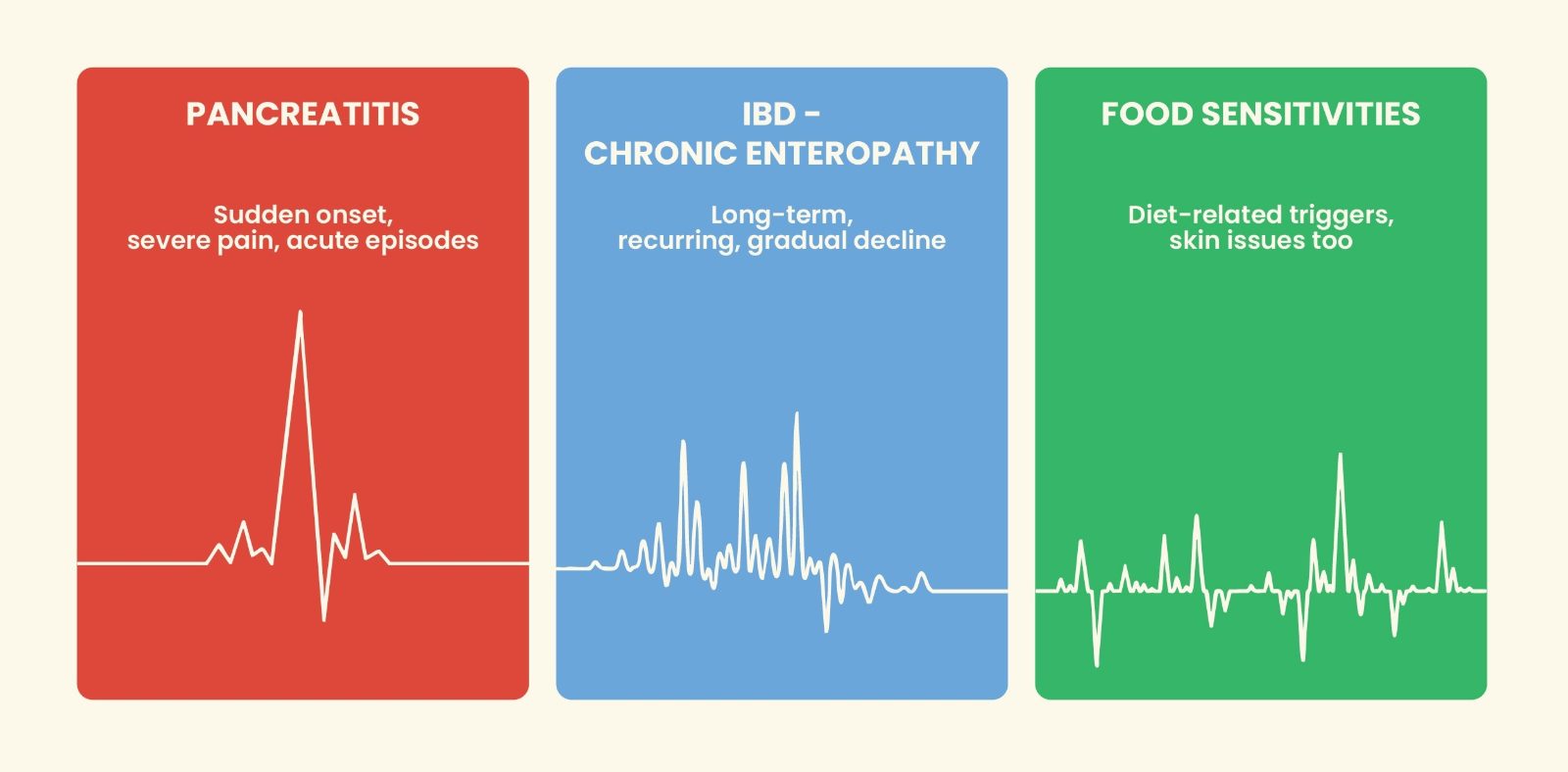
Pancreatitis, or inflammation of the pancreas, can range from mild to life-threatening. Dogs may show vomiting, diarrhoea, abdominal pain, dehydration, weakness, or loss of appetite. In some cases, signs are subtle and easily overlooked, while in others they progress rapidly.
In one recent case supported by our in-house veterinary team, a dog initially presented with intermittent vomiting and reduced appetite that appeared to resolve between episodes. Over time, flare-ups became more frequent, and diagnostic testing confirmed pancreatitis. With appropriate dietary fat restriction and veterinary management, the dog stabilised and regained a good quality of life.
Features that may raise suspicion for pancreatitis include:
- Sudden onset of vomiting or refusal to eat
- Marked lethargy or weakness
- A painful abdomen or reluctance to move
- Recurrent flare-ups rather than a single episode
Diagnosis is based on clinical signs combined with laboratory testing, such as pancreatic lipase blood tests, and diagnostic imaging. Results are always interpreted together, as no single test can confirm pancreatitis on its own.
When inflammatory bowel disease or chronic enteropathy is suspected
In veterinary medicine, inflammatory bowel disease (IBD) sits within a broader group of conditions known as chronic enteropathy, meaning long-term digestive disease. These conditions are defined by ongoing or recurring gastrointestinal signs. Dogs may experience symptoms for weeks or months, sometimes with periods of partial improvement followed by relapse.
Studies show that food-responsive enteropathy accounts for approximately 50–65% of canine chronic inflammatory enteropathy cases, meaning many dogs initially suspected to have IBD improve significantly with structured dietary management alone. Some dogs labelled as “non-responsive” are later reclassified once diet trials and secondary causes are fully addressed.
Common features include:
- Long-term diarrhoea or intermittent vomiting
- Gradual weight loss or muscle loss
- Poor nutrient absorption
- Reduced appetite or inconsistent eating habits
"IBD is a diagnosis we should earn, not assume. Many dogs improve once diet and gut inflammation are properly managed, which is why a stepwise approach is so important before applying a lifelong disease label." Dr. Georges Rizk - Wunderdog's In-House Vet
A definitive diagnosis of IBD typically requires intestinal biopsies, where small tissue samples are collected, most commonly using endoscopy, a camera-based examination of the gut. These samples are assessed by a veterinary pathologist using established international guidelines. In many cases, vets may first rule out more common causes and assess response to diet or other supportive steps before moving to biopsy, depending on severity and progression.
When food sensitivities play a role
Food sensitivities can cause digestive signs on their own or contribute to chronic gut inflammation. Within veterinary classification, some dogs fall under food-responsive enteropathy, where symptoms improve significantly following a carefully managed dietary change.
Signs that may suggest a dietary trigger include:
- Symptoms that worsen after treats, chews, or table food
- Digestive flare-ups following diet changes
- Concurrent skin or ear issues in some dogs
Why these conditions often overlap
Digestive conditions rarely exist in isolation. A dog with chronic intestinal inflammation may develop secondary sensitivities, while pancreatitis can occur alongside underlying gastrointestinal disease. This overlap explains why symptoms can blur together and why a stepwise, evidence-led diagnostic approach is recommended in veterinary gastroenterology.
How vets approach diagnosis
When digestive symptoms persist or recur, vets focus on building a clear picture of what is happening and narrowing down the cause step by step. This usually starts with your dog’s history and your observations, followed by basic tests to rule out common or systemic causes, with more targeted investigations and structured diet trials where needed. If signs remain persistent, severe, or unexplained, endoscopic biopsies may be recommended to confirm intestinal inflammation and guide the most appropriate treatment.
Taking the next step
Digestive issues are not something dog parents need to solve alone, but they also do not always mean something serious is going on. Most one-off upsets improve with time and supportive care. When symptoms persist, change, or return repeatedly, veterinary guidance is the safest way to reach the right diagnosis and avoid unnecessary trial and error.
If you are noticing ongoing digestive signs, start by documenting what you see rather than trying to interpret every symptom in isolation. Stool consistency, appetite changes, timing of symptoms, and diet history all provide valuable clues for your vet. With the right partnership and a calm, stepwise approach, many dogs with digestive conditions can achieve long-term stability and an improved quality of life.
Related reading: Why Your Dog Turns Into a Picky Eater When Summer Hits (And How to Help) and How to Switch Dog Food Safely: A Step-by-Step Guide