Can Food Really Boost Your Dog's Immune System? A Vet Explains
The short answer
No food can switch your dog's immune system into overdrive. What a good diet can do is give the immune system what it needs to work well: quality protein, omega-3s, antioxidants such as beta-carotene and lutein, and a healthy gut. Gaps in any of these can weaken immunity, and filling them helps. If your dog keeps getting sick, though, the food bowl is rarely the whole story. Book a visit with your vet.
Why "boost" is the wrong word
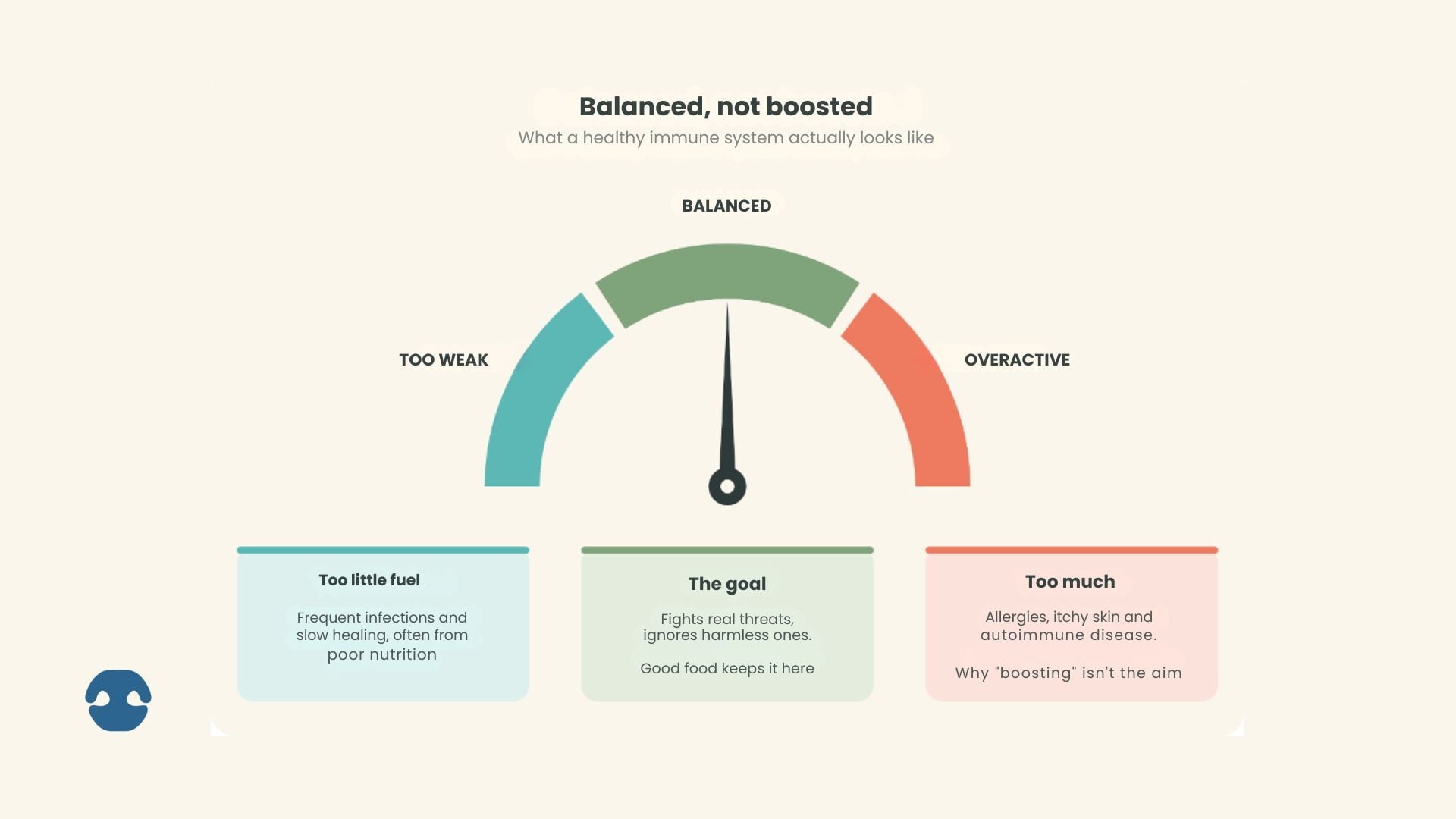
Many supplements promise to "boost" your dog's immune system. But a stronger immune response isn't always a better one. An overactive immune system is what lies behind allergies, itchy skin and autoimmune disease.
What your dog needs is a balanced immune system. One that responds firmly to real threats, such as harmful bacteria and viruses, and stays calm around harmless things, such as pollen or the ingredients in their dinner.
Nutrition can't push the immune system beyond that balance. Its role is to supply the building blocks the immune system needs to stay there.
Start with the gut
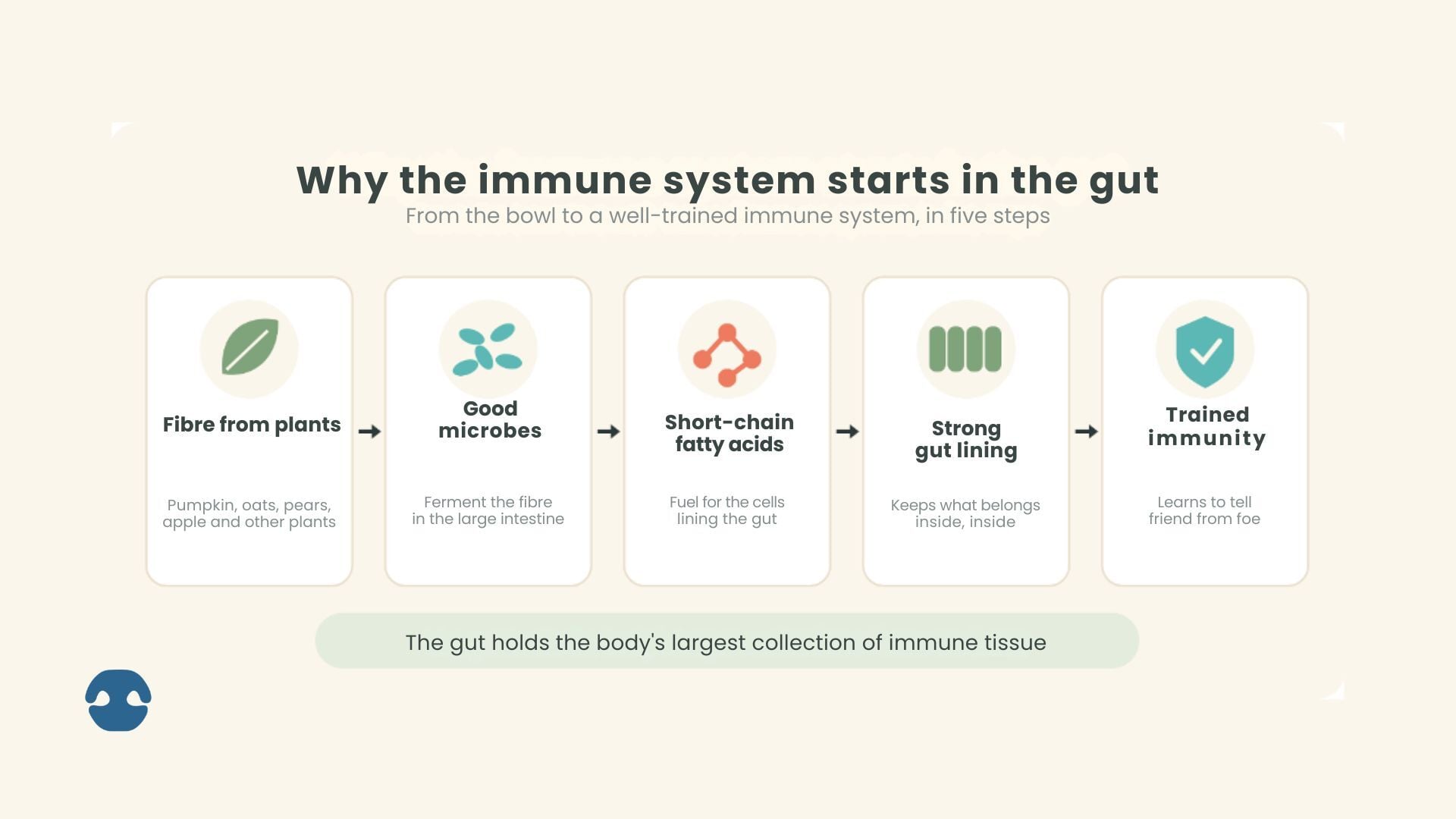
Your dog's gut does far more than digest food. It holds the body's largest collection of immune tissue. The trillions of microbes living there, known as the gut microbiome, help the immune system learn to tell harmless from harmful.
A healthy, diverse microbiome supports a well-regulated immune response.
Three ways to support your dog's gut:
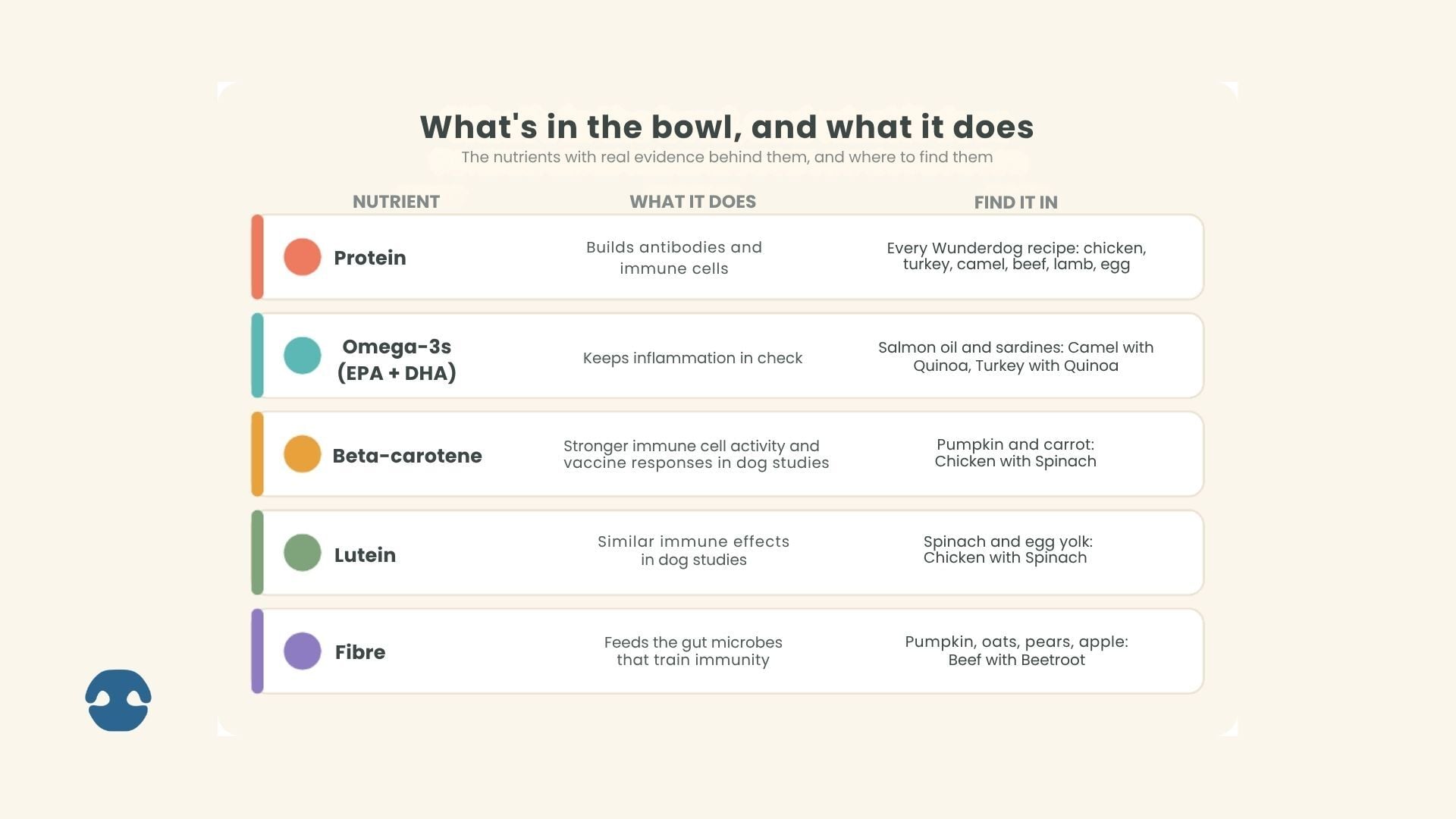
- Fibre from vegetables and fruit. Beneficial bacteria ferment fibre into short-chain fatty acids. These help keep the gut lining healthy and intact. Our Beef with Beetroot gets its fibre from pumpkin, oats, pears and apple.
- Probiotics with evidence behind them. Benefits depend on the specific strain. In one study, puppies given a strain called Enterococcus faecium SF68 produced more antibodies after their distemper vaccine than puppies who didn't receive it.
- Gradual diet changes. A sudden switch can unsettle the gut and its microbes. Move to a new food gradually over 7 to 10 days.
Want to know what vegetables actually do for your dog? Read What Fresh Produce Really Does for Dogs.
The nutrients with the strongest evidence
- Protein. Antibodies and immune cells are built from protein. Malnutrition is one of the best-documented causes of weakened immunity in any species. It's one reason underweight rescue dogs often seem to pick up every infection going. Read more in Why Fresh Food Matters for Shelter Dogs.
- Omega-3s (EPA and DHA). Found in fish and fish oil, these fatty acids help keep inflammation in check. Our Camel with Quinoa contains the most EPA and DHA in our range, and Turkey with Quinoa gets its omega-3s from both sardines and salmon oil.
- Antioxidants. Some of the most interesting dog research sits here. Dogs fed beta-carotene, the orange pigment in carrots and pumpkin, showed stronger immune cell activity and better responses to vaccines. Lutein, found in leafy greens and egg yolk, had a similar effect. Our Chicken with Spinach includes pumpkin, carrots, spinach, broccoli and egg, and the Berry Turkey topper adds blueberries, strawberries and beetroot.
- Zinc, selenium and vitamins A and D. Less talked about, but just as essential. A complete and balanced diet already provides them in the right amounts, so there's no need to add supplements without your vet's advice. Too much can cause harm, just as too little can.
Does fresh, gently cooked food help?
The honest answer is that no study has yet compared how often dogs on fresh food and dogs on kibble get infections. So any promise that fresh food prevents illness goes beyond the evidence.
What we do know: in a University of Illinois study, dogs digested fresh, human-grade diets more efficiently than an extruded dry diet, and their gut microbiome changed too. Better digestibility means your dog absorbs and uses more of the nutrients in their bowl. Gentle cooking also avoids the very high temperatures that can degrade some vitamins and fats.
That makes fresh food a sound nutritional foundation, working alongside good veterinary care. Learn more in Beyond the Bowl: The Powerful Impact of Gently Cooked Dog Food.
When it's not the food
If your dog seems to be unwell often, the food bowl is rarely the first place to look. Recurring skin, ear or urinary infections can point to allergies, hormonal conditions such as hypothyroidism or Cushing's disease, diabetes, parasites or, rarely, an inherited immune disorder.
Speak to your vet if your dog has:
- infections that keep coming back after treatment
- weight loss, low energy or a dull coat
- ongoing diarrhoea or vomiting
- increased thirst
Your vet can find and treat the underlying cause. Nutrition then plays its supporting role.
The bottom line
There's no shortcut to a healthy immune system. Feed a complete and balanced diet with quality protein, omega-3s and colourful vegetables and fruit. Support your dog's gut, keep vaccinations and parasite control up to date, and ask your vet to investigate if your dog keeps getting sick.
Good nutrition won't push your dog's immune system into overdrive. It gives it what it needs to do its job well, every day.
Curious which recipe suits your dog? Book a FREE nutrition consult.