
Pancreatitis Recovery: More Than Just Low Fat
Pancreatitis is one of the conditions I see most often in sensitive dogs, and it can be a frightening diagnosis for parents. The sudden vomiting, abdominal pain, and sometimes even emergency hospital stays make it a condition that leaves lasting anxiety in families.
Most people know that low-fat food is often recommended for managing pancreatitis, and that’s true. Fat is the best-known trigger because it demands so much work from the pancreas. But focusing only on fat misses the bigger picture. Recovery from pancreatitis isn’t just about what we remove; it’s about what we add back in to calm inflammation, repair tissue, and give the body strength to heal.
Why Low Fat Isn’t Enough
Fat restriction may reduce the risk of flare-ups, but the pancreas and gut lining also need nutrients to recover. Repeated episodes can leave a dog depleted and fragile, so therapeutic food has to do more than just “avoid fat.”
The pancreas isn’t an isolated organ. It works alongside the intestines, liver, and immune system. When inflammation spreads, the gut barrier becomes “leaky,” bacteria shift in the microbiome, and the immune system stays on high alert. Unless nutrition addresses these ripple effects, recovery will be slow and flare-ups more likely.
Nutrients That Support Recovery
Here’s what I look for when building or recommending a pancreatitis-friendly recipe:
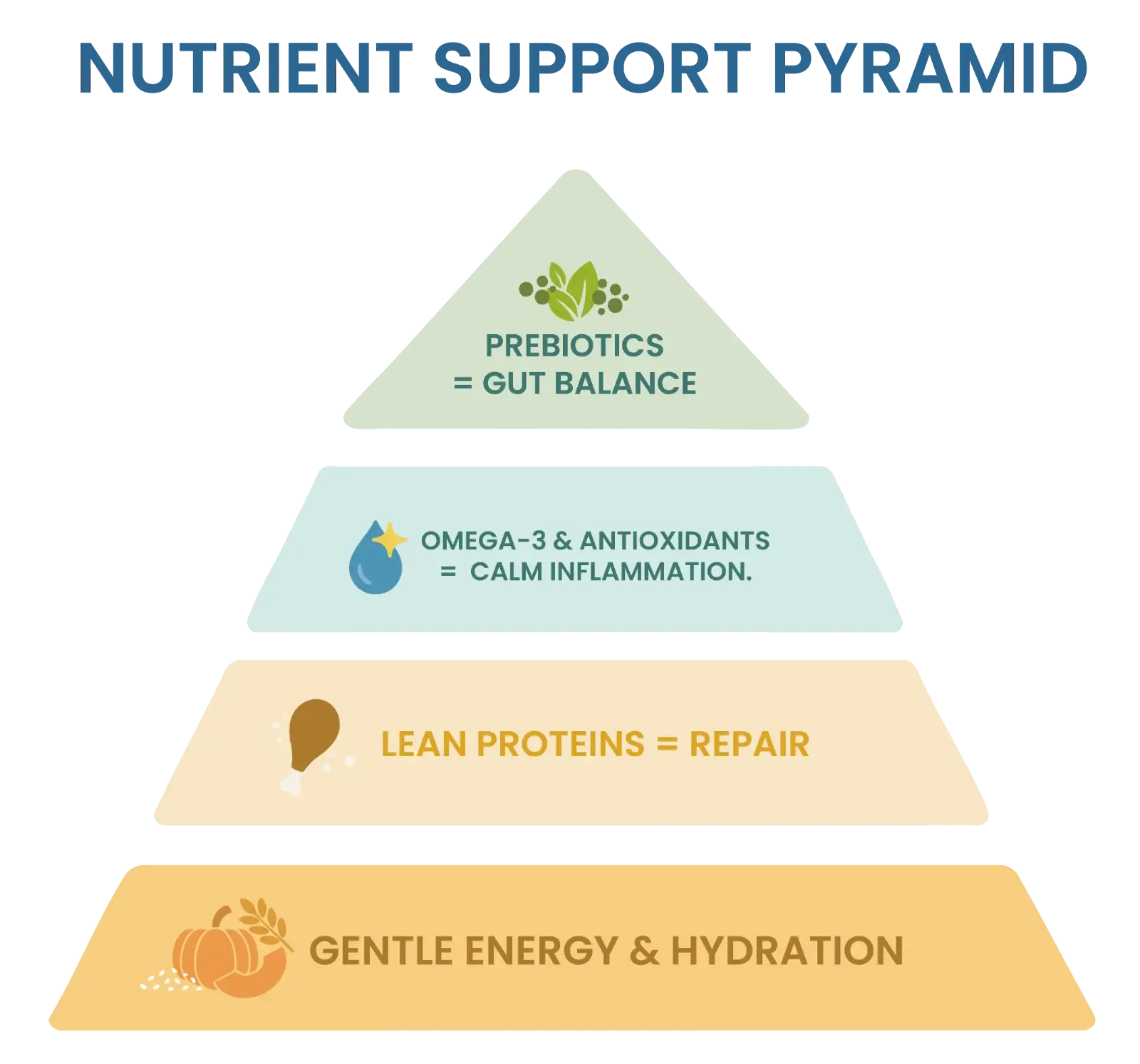
- Ultra-lean proteins (like turkey and duck) → give strength and preserve muscle without overstimulating the pancreas.
- Gentle carbohydrates (pumpkin, oats, rice) → steady energy without digestive strain.
- Omega-3 fatty acids (EPA/DHA from salmon oil) → may help calm inflammation, although a direct benefit in pancreatitis has not been proven in dogs.
- B vitamins and antioxidants (from liver, honey, vegetables) → restore what’s lost during vomiting and poor appetite, support cellular repair.
- Prebiotics (FOS, fibres from pumpkin/banana) → may help the microbiome bounce back after antibiotics and inflammation.
- Electrolytes and hydration support → many dogs with pancreatitis become dehydrated quickly; water-rich food helps restore balance.
When these elements come together, food stops being just a “safe filler” and instead becomes part of the treatment plan itself.
Warning Signs Every Parent Should Know
Catching pancreatitis early can make the difference between a mild flare-up and an emergency. Parents should always watch for:
- Sudden vomiting (especially after meals)
- Loss of appetite or refusing food
- Abdominal pain (often shown as the “prayer position”; front legs down, hips raised)
- Lethargy or weakness
- Greasy, foul-smelling stools
- Fever or shaking
If you notice blood in the vomit or stool, repeated vomiting, collapse, or severe pain, that is an emergency, get to a veterinarian immediately.
What Recovery Looks Like
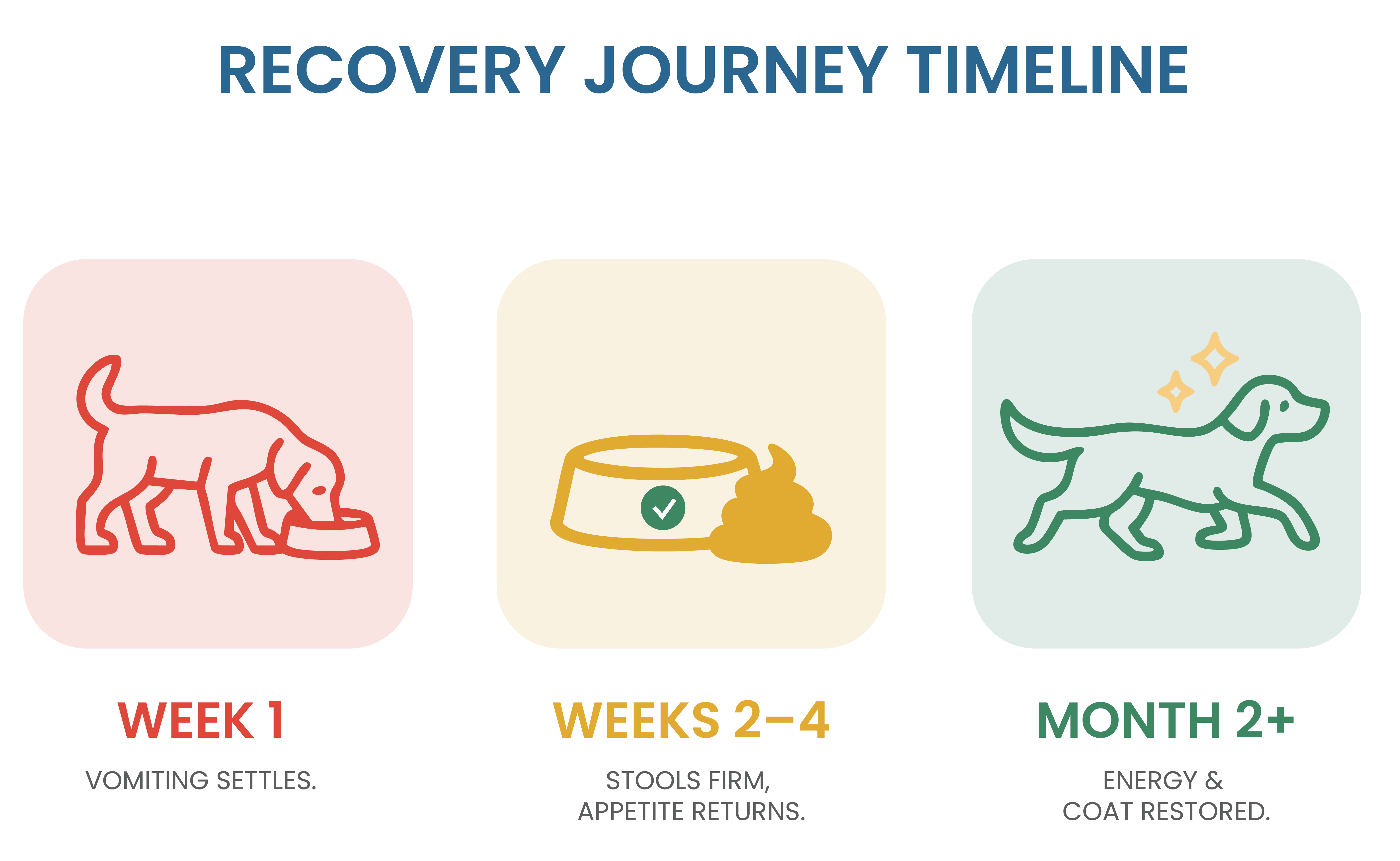
For most dogs, improvement is gradual:
- First week: vomiting stops, appetite begins to return, stools firm up.
- One month: energy levels rise, coat improves, flare-ups become less frequent.
- Long-term: with consistent low-fat, nutrient-rich food, many dogs go months or years without another attack. Parents often describe their dog as “themselves again”; playful, hungry, and comfortable.
A Parent’s Perspective
I remember working with a 4-year-old Dachshund who had been rushed to the vet three times in one year for pancreatitis. Her family was terrified to feed her anything, convinced the next treat might send her back to the hospital. Once we moved her onto an ultra-low-fat, nutrient-balanced therapeutic recipe, she went eight months without a single episode. For her parents, the relief was not just medical but emotional, they finally felt safe again.
Final Thought
Managing pancreatitis is about more than avoiding fat. It’s about creating the right nutritional environment for the pancreas and the whole digestive system to heal and stay stable.
Therapeutic food should give parents peace of mind; meals that are safe, nourishing, and actually support long-term recovery. Because when food is chosen with care, it doesn’t just help lower the risk of the next flare, it gives your dog the chance to live comfortably, with joy and energy, day after day.
Related reading: Low-Fat Diets for Dogs: Managing Pancreatitis and Fat Intolerance and Reading the Signs: When Digestive Issues Signal Something More