
Back to blogs Pregnant dog resting on a white bed, showing her growing belly during pregnancy.

Feeding a Pregnant Dog: What Actually Changes, and When

Dr. Georges Rizk, In-House Veterinary Consultant at Wunderdog | Oct 7, 2026
Canine Nutrition
Dog Health & Wellness
Pregnant Dog
A quick glimpse: a pregnant dog's energy needs barely move for the first six weeks, then climb fast, peaking during lactation at roughly two and a half times her normal maintenance needs. The mistake isn't feeding too little early on, it's not adjusting once her needs actually start climbing.

A quick glimpse: a pregnant dog's energy needs barely move for the first six weeks, then climb fast, peaking during lactation at roughly two and a half times her normal maintenance needs. The mistake isn't feeding too little early on, it's not adjusting once her needs actually start climbing.

Here's how that curve actually plays out, and what to do about it.

The timeline owners get wrong

Most owners either overfeed from day one, worried about “eating for the litter,” or underfeed later because the early weeks looked so unremarkable. Neither matches what's actually happening. Energy demand stays essentially flat until about week six of a roughly nine-week pregnancy. Then it climbs, reaching close to 1.8 times her normal maintenance by week nine. It's not a straight line, and feeding a flat amount throughout misses both ends of it.
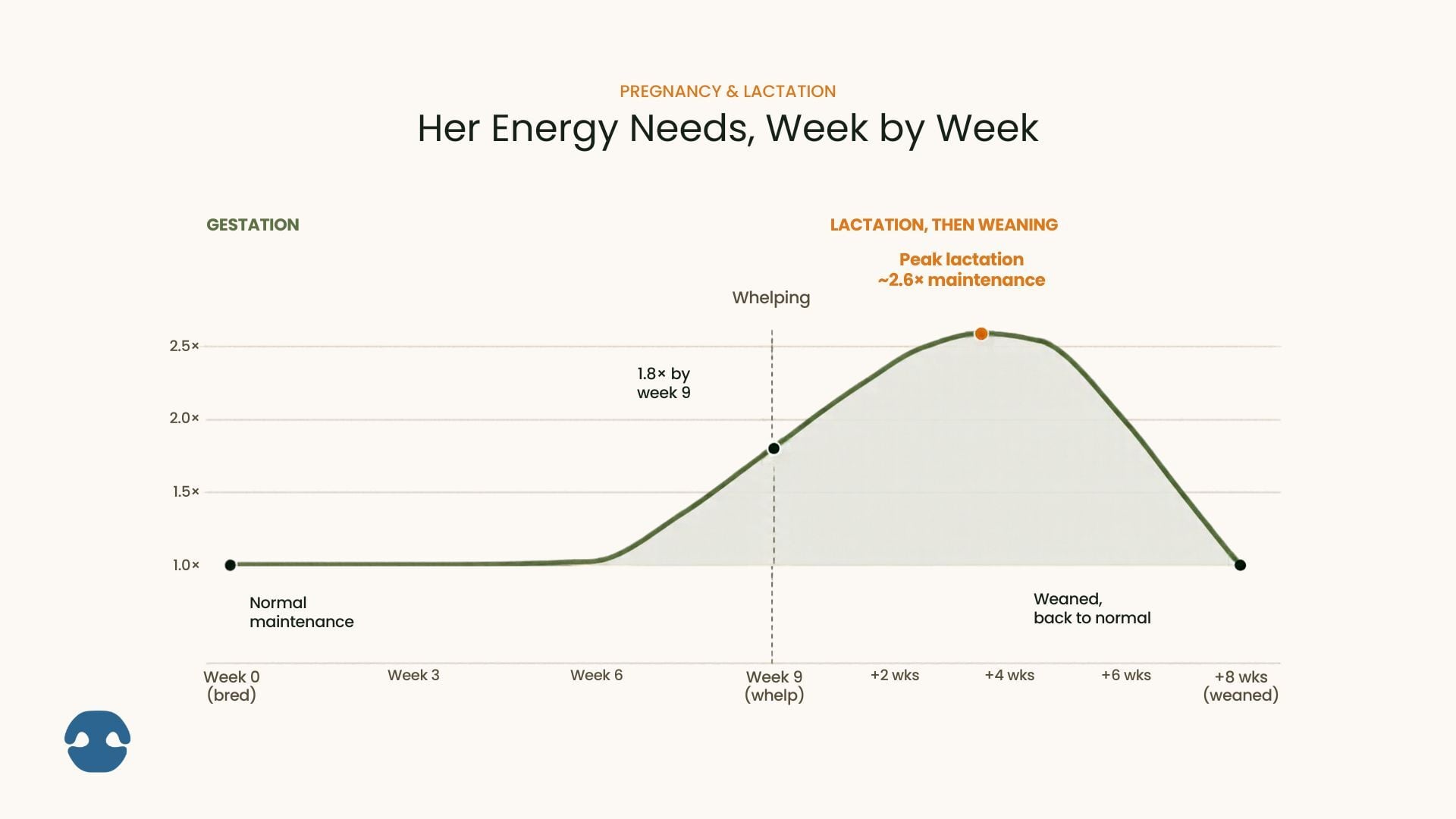
Chart showing how a dog’s energy needs increase from pregnancy through peak lactation and return to normal after weaning.

Lactation is the real peak, not the pregnancy

This is the part that catches people off guard. Nursing a litter demands far more than growing one, energy needs can spike to around 2.6 times maintenance during peak lactation, typically weeks two to four after whelping, before gradually tapering back down as the puppies wean, usually around 2.0 times maintenance by week six. If you're still feeding her like she's pregnant once she's nursing a litter, she's running a real calorie deficit at exactly the point she can least afford one.

What her body actually needs more of

Beyond raw calories, a few things matter specifically. DHA supports the puppies' developing brains and eyes, and it's most useful through the second half of pregnancy and into lactation. Protein needs rise alongside the energy curve, since she's building placental and mammary tissue as well as feeding a litter. Calcium is one to leave to a properly balanced diet rather than free-supplementing, over-supplementing calcium during pregnancy can actually interfere with her own calcium regulation around whelping.

What this looks like in the bowl

This is a genuinely good example of what “matched, not one-size-fits-all” actually means in practice. We're not selling a separate “pregnancy food,” we're pointing you toward the Wunderdog recipes already built for a higher energy demand, Chicken with Banana and Turkey with Quinoa both sit at the higher end of our energy density range and were originally built for athletes and growing puppies, which happens to be exactly the profile a pregnant or nursing dog needs too. During the lactation peak specifically, our toppers are built to layer extra calories on top without you having to guess at portions from scratch.
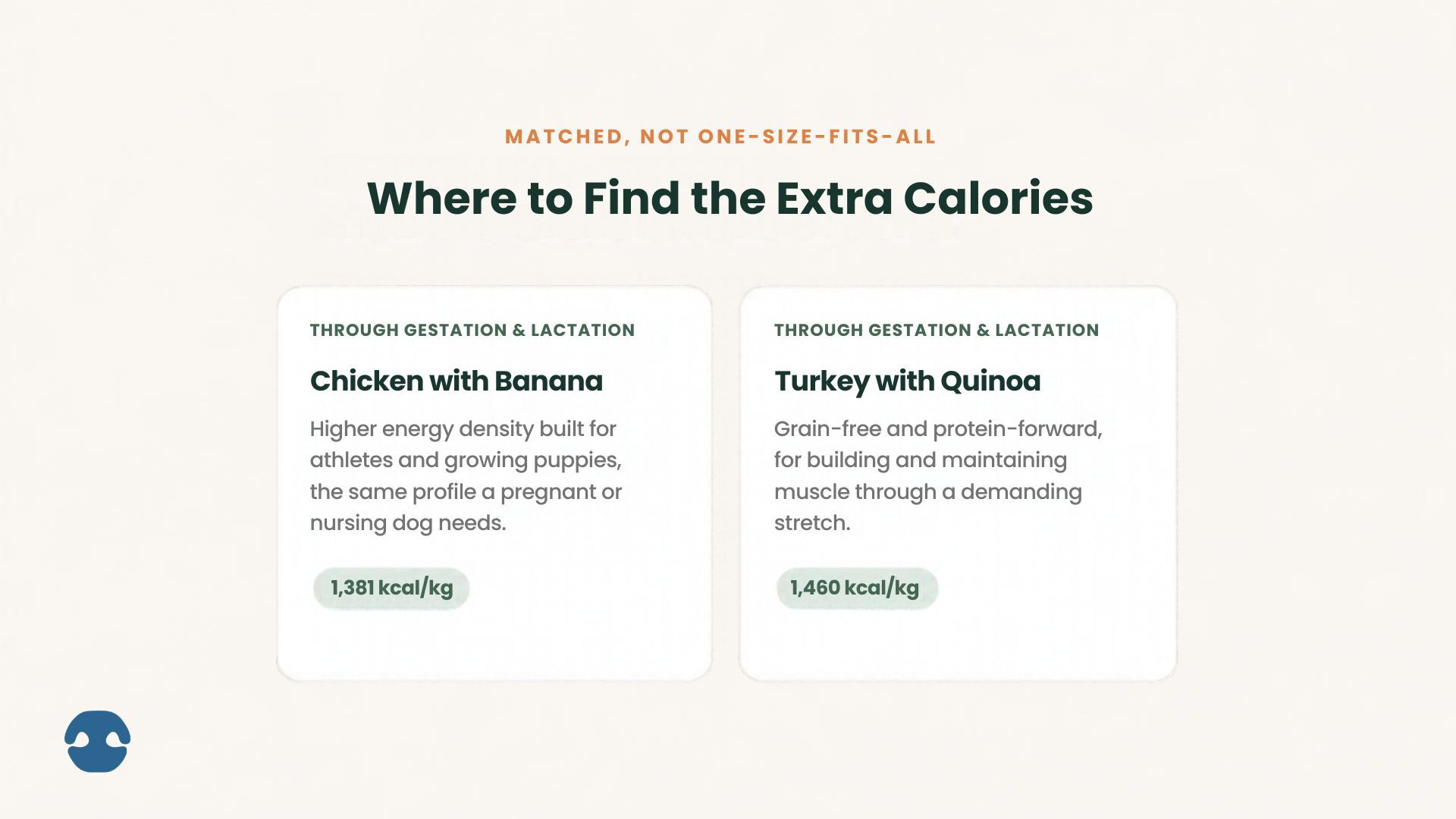
Wunderdog Chicken with Banana and Turkey with Quinoa recipes recommended for higher energy needs during pregnancy and lactation.

The practical bit

Increase gradually as she moves through the timeline above rather than jumping straight to a big increase on day one, and split meals into smaller, more frequent portions later in pregnancy, there's simply less room in her abdomen for a big single meal. Weigh her regularly rather than eyeballing it, body condition is the most honest guide you have.

Frequently asked questions

When should I start increasing my dog's food during pregnancy?

Not immediately, her needs stay close to normal until around week six, then climb steadily.

Is lactation really more demanding than pregnancy itself?

Yes, noticeably. Peak lactation can run close to 2.6 times her normal maintenance needs, well above the pregnancy peak.

Do I need a special “pregnancy food” for my dog?

Not necessarily, a higher-energy recipe from the everyday range, adjusted in amount as her needs climb, does the job.
Related articles

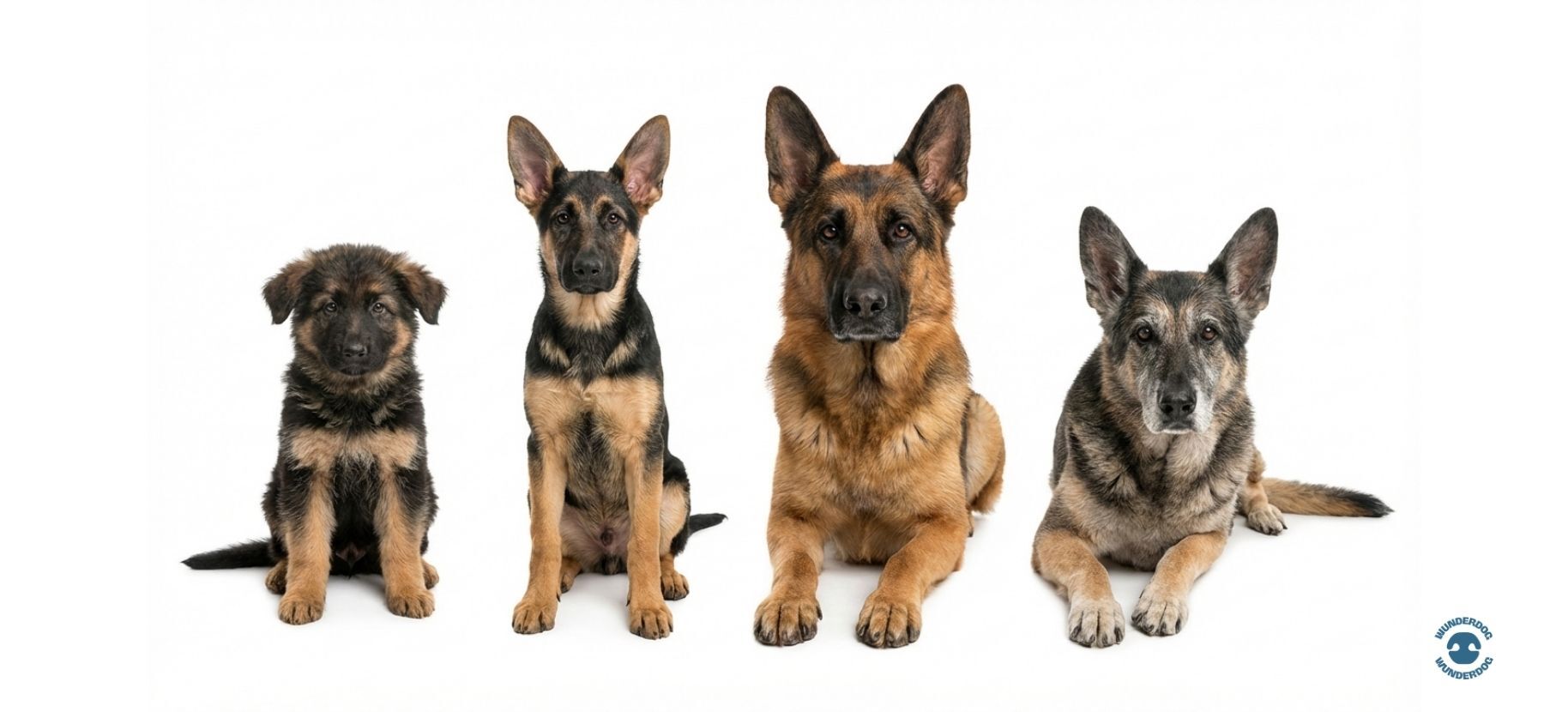
Dogs shown from puppy to senior to represent changing nutritional needs at each life stage.
Canine NutritionDog Health & WellnessLife Stage Nutrition

Mind, Body, Soul: A Dog Nutrition Journey That Changes Over Time

When a client recently asked me why her Labrador was thriving on a recipe that made her friend's Lab gassy and lethargic, I wasn't surprised. I hear variations of this question every week in Dubai.

Read More
A Labrador lying on a veterinary examination table while a vet wearing gloves examines its abdomen. The owner, in a brown top, gently comforts the dog. The Wundercare logo appears at the bottom left.
Canine NutritionDog Health & WellnessTherapeutic Recipes

The Gut-Brain Connection and Your Dog’s Health

Your dog's gut is doing a lot more than you think. While you're watching them play, sleep, or greet you at the door, their digestive system is quietly running the show. It's not just breaking down food. It's sending signals to the brain, training the immune system, and setting the tone for how energetic or anxious your dog feels on any given day. A dog with a balanced gut tends to bounce through life with more energy and steadier moods. A dog whose gut is struggling? The signs show up everywhere, from their behaviour to their coat to how often they get sick.

Read More
Small brown and white dog sitting on a kitchen floor next to two white ceramic food bowls on wooden stands, looking up expectantly. Wunderdog logo appears in the bottom right corner.
Gently Cooked Dog FoodFresh Dog FoodCanine Nutrition

Why Dogs Become Picky Eaters in Summer and How to Help

Summer brings so many joys, those epic sunset walks, lazy afternoons in the backyard, and maybe even a dog-friendly beach trip or two. But if you've been scratching your head wondering why your usually food-obsessed dog suddenly seems "meh" about dinner, you're definitely not alone. Research shows that dogs naturally eat about 15% less during the warmer months compared to winter. It's like they have their own built-in seasonal eating plan. What's Really Going On? Think about it when it's blazing hot outside, are you reaching for that hearty stew or craving something lighter? Your dog's thinking the same way. Here's what's happening: They're naturally less active. Hot weather makes everyone (dogs included) want to move a little slower. Less zoomies around the yard means they don't need as much fuel in the tank. Their body's natural rhythm shifts. Those long, bright summer days can actually affect their hormones, slowing down digestion and making them feel satisfied longer. Eating feels like work when you're already warm. Just like you might skip that hot soup on a 90-degree day, your dog might pass on food when they're already trying to cool down. Your Summer Game Plan "It’s completely normal for dogs to have a reduced appetite in warmer weather. Their metabolic needs drop with lower activity, and heat can suppress hunger signals. That’s why feeding during cooler times of the day – early morning or after sunset – often helps them feel more inclined to eat," says our in-house veterinarian at Wunderdog. Here's what's happening and how to deal with it: The reality: Your dog's body is naturally adjusting to the season. They're moving less, their metabolism slows down, and eating large meals when it's hot simply doesn't feel comfortable. Your approach: Cut back their food by about 20-30% during peak summer months. Give them a lighter breakfast (30%) and save the bigger portion for evening (70%) when it's cooler. Stick with their usual food now's not the time for major changes. Most importantly, trust your instincts. If something feels off beyond normal summer sluggishness, don't hesitate to reach out. Ways to Make Mealtime Even More Appealing Here are some additional proven strategies that really work: Set up their dining area somewhere cool and breezy, maybe that shaded corner of the kitchen instead of by the sunny window. Try switching up their protein or adding something special like a splash of bone broth . Turkey with Honey is considered one of our lighter recipes, making it a great option for warmer days. "In warm weather, dogs may naturally eat less, but variety can help keep them engaged at mealtime. Rotating between lighter recipes, like turkey, lamb, or camel, can keep things interesting without overwhelming the digestive system. You can also add a functional topper like HydroHund or bone broth to enhance hydration and encourage eating, especially if your dog’s appetite is a bit off." says Dr George, our in-house veterinarian at Wunderdog. Feed them when they're naturally more interested, early morning before the heat kicks in, or evening when things cool down. You know how you're more interested in dinner at 6 PM than at noon on a hot day? Same concept. Keep those water bowls filled and fresh. Maybe even add an extra water station outside if they spend time in the yard. When Should You Actually Worry? A little summer pickiness? Totally normal. But keep an eye out for these warning signs: They're completely ignoring meals (not just being selective) Food sits untouched in their bowl for hours They seem unusually tired or off You notice they're losing weight If your dog goes on a total food strike or seems unwell, definitely give your vet a call. Sometimes appetite changes can signal other issues like infections or tooth pain. Still Feeling Unsure? Every dog is different, and you know yours better than anyone. If their eating habits have you concerned or they seem more lethargic than usual, just reach out to us. We're always here to help you figure out what's best for your pup.

Read More
Back to blogs