The Powerful Impact of Gently Cooked Dog Food
You've noticed it too, haven't you? That profound shift in how we think about our dogs. They're not just pets anymore they're the ones who greet you after a long day, who sense when you're feeling down, who share in your joys and sorrows.
Just as you wouldn't serve your child processed food at every meal, you're beginning to question whether traditional kibble serves your dog's wellbeing. You're part of a growing community of pet owners who understand that nutrition isn't just about filling a bowl it's about nourishing a life.
Remember when you switched to eating more whole foods yourself? How much better did you feel? Your dog deserves that same transformation. They're counting on you to make the best choices for their health, just as a parent would for their child.
Enter gently cooked dog food: a novel approach that bridges the gap between highly processed kibble and controversial raw diets. This method of food preparation is gaining tremendous popularity among conscientious dog owners who want to provide nutritious, delicious meals without compromising on safety or convenience.
What Is Gently Cooked Dog Food?
Gently cooked dog food is exactly what it sounds like: fresh ingredients that are cooked using gentle, low-temperature methods to preserve nutrients while ensuring safety. Unlike traditional kibble manufacturing which involves high-heat extrusion processes often exceeding 150°C, gentle cooking typically uses temperatures between 70-90°C for just long enough to make the food safe and digestible.
The cooking process is carefully controlled to maintain the integrity of proteins, vitamins, minerals and other essential nutrients found in the fresh ingredients. This means cooking slowly at lower temperatures, often using methods similar to sous-vide or slow cooking techniques familiar in human cuisine.
This is vastly different from conventional kibble production, where ingredients are subjected to extreme heat and pressure during extrusion, destroying many heat-sensitive nutrients and significantly reducing the bioavailability of essential amino acids - often requiring the addition of synthetic vitamin supplements afterwards.
Gently cooked food also differs fundamentally from raw diets. While advocates of these diets point to the natural eating patterns of wild canids, gently cooked food acknowledges that:
- Domesticated dogs have evolved alongside humans for thousands of years
- Cooking breaks down cell walls in plants, increasing nutrient availability
- Heating food eliminates harmful pathogens like Salmonella and E. coli that can affect both dogs and their human families
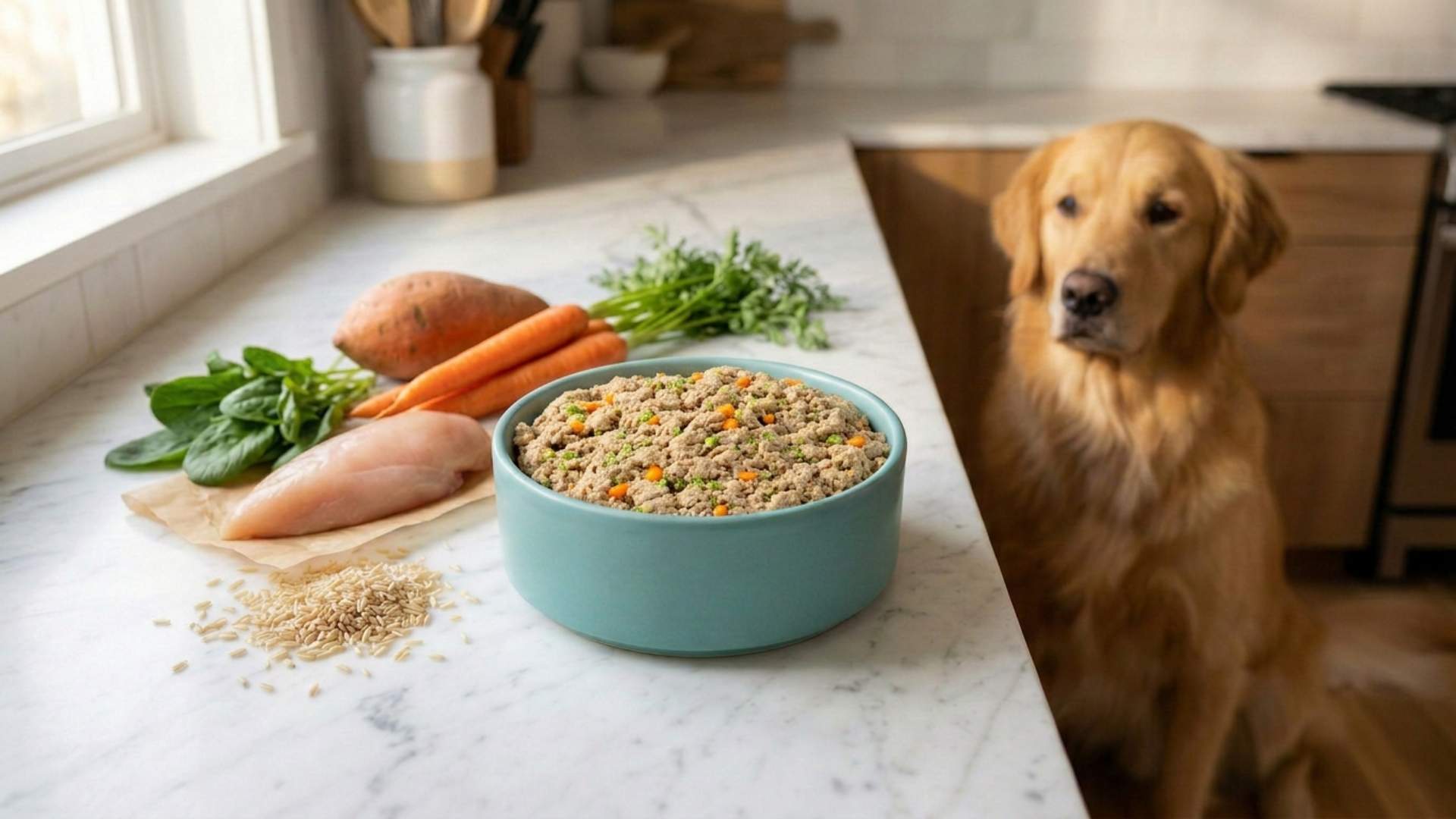
Most importantly, gently cooked dog food uses human-grade ingredients real, whole foods you'd recognise from your own kitchen rather than feed-grade ingredients permitted in conventional pet food. Think fresh chicken, beef, lamb, sweet potatoes, carrots, spinach and other wholesome components, prepared with your dog's nutritional needs in mind.
Why the Way It's Cooked Matters
The cooking method dramatically impacts the nutritional profile of the food that ultimately reaches your dog's bowl. Gentle cooking strikes the perfect balance between safety and nutrition in ways that both kibble and raw diets cannot match.
When ingredients are cooked at lower temperatures, they retain significantly more of their natural nutritional value. Research published in the Journal of Animal Science found that gently cooked diets improve protein digestibility while maintaining safety by eliminating pathogenic risks. This means your dog can absorb more nutrients from the same ingredients when they’re gently prepared rather than heavily processed.
Digestibility is perhaps one of the most immediate benefits dog owners notice when switching to gently cooked food. The gentle cooking process breaks down plant cell walls and slightly denatures proteins, making them easier for your dog's digestive system to process.
Then there's the palatability factor. Dogs have approximately 1,700 taste buds (compared to our 9,000), but their sense of smell is estimated to be between 10,000 to 100,000 times more acute than humans. Gently cooked food retains more of the natural aromas and flavours that dogs find irresistible, making mealtime more enjoyable especially for notoriously picky eaters.
Safety considerations cannot be overlooked either. While raw food diets have passionate advocates, they come with documented risks of bacterial contamination. The Journal of American Veterinary Medical Association has published multiple papers showing significant pathogen presence in commercially available raw pet foods, which can affect both canine and human health. Gentle cooking eliminates these risks while preserving nutritional integrity.
The health advantages of switching to gently cooked food can be remarkable, often visible within weeks of transitioning. These benefits stem from improved ingredient quality, enhanced digestibility, and the preservation of natural nutrients.
Health Benefits of Gently Cooked Dog Food
Perhaps the most immediately noticeable change reported by dog owners is improved digestion. The gentle cooking process makes nutrients more bioavailable while being easier on your dog's digestive system.
The improved digestibility and nutrient density of gently cooked food often leads to:
- Easier weight management
- Appropriate muscle maintenance
- Better satiety (feeling full and satisfied)
- More efficient metabolism
In fact, a journal article published in the Transitional Animal Science found that gently cooked diet improved amino acid digestibility and nitrogen corrected true metabolizable energy in dogs. This suggests that proper cooking can enhance nutrient absorption, particularly beneficial for dogs with sensitive digestive systems.
The quality of a dog's skin and coat also serves as a visible indicator of overall health. Gently cooked diets rich in balanced omega fatty acids, high-quality proteins, and crucial vitamins often produce remarkable improvements:
Many dog owners report these changes within 4-6 weeks of transitioning to a gently cooked diet, particularly for dogs previously suffering from food-related skin sensitivities.
Energy and vitality are other important signs. Dogs on gently cooked diets frequently display:
- More consistent energy (without hyperactivity spikes)
- Increased playfulness and engagement
- Better mobility, especially in older dogs
- Improved muscle tone and maintenance
At Wunderdog, we've observed these positive changes across numerous breeds and ages, with many dogs showing renewed vitality within just weeks of transitioning to our gently cooked recipes.
Reduced Allergies and Sensitivities
Many apparent food allergies or sensitivities may actually be reactions to artificial additives, preservatives, or low-quality ingredients found in highly processed dog foods. Gently cooked food with limited, high-quality ingredients often results in:
- Fewer allergic reactions
- Reduction in chronic ear infections
- Decreased gastrointestinal sensitivity
- Less excessive paw licking and chewing
For dogs with genuine food sensitivities, the simplified ingredient lists and custom recipe options available with many gently cooked food services make it easier to identify and avoid problematic components.
Ingredient Transparency
What you won't find in quality gently cooked food are the concerning ingredients often hidden in conventional pet foods:
- Artificial colours and flavours
- Chemical preservatives like BHA, BHT, or ethoxyquin
- Anonymous meat meals or by-products
- Fillers with minimal nutritional value
- Excessive carbohydrates used as inexpensive calorie sources
The gently cooked dog food movement prioritises real, recognisable whole foods:
- Named animal proteins (like "chicken thigh" rather than "meat by-products")
- Whole vegetables and fruits
- Appropriate complex carbohydrates when needed
- Natural sources of essential fatty acids
Transparency is at the heart of what we do. Wunderdog shares full details about where our ingredients come from, how they are prepared, and the quality control steps we follow. This openness helps dog owners make confident, well-informed decisions about what they feed their pets.
Is Gently Cooked Food Right for Every Dog?
While gently cooked food offers numerous benefits, individual circumstances always warrant consideration. Dogs, like humans, have unique needs based on their age, health status, activity level, and occasional personal preferences.
Dogs with specific medical conditions may require tailored nutritional profiles. For example:
- Dogs with kidney disease often need precisely controlled protein levels
- Diabetic dogs benefit from carefully managed carbohydrate content
- Dogs with certain rare metabolic disorders might need highly specialised diets
For such cases, consultation with a veterinary nutritionist is advisable before making dietary changes. At Wunderdog, we offer specialised recipes developed by veterinary nutritionists that can accommodate various health conditions.
The good news is that most dogs thrive on properly formulated gently cooked diets. The improved digestibility often makes these diets suitable even for dogs with sensitive stomachs or food intolerances that might struggle with conventional options.
For dogs transitioning from kibble, a gradual introduction over 7 days is recommended to allow their digestive systems to adjust to the more nutrient-dense food. At Wunderdog, we provide detailed transition guidelines to ensure a smooth switch.
Every dog deserves food that supports their health, brings them joy, and helps them thrive throughout their lives. Gently cooked dog food, with its focus on quality ingredients prepared in ways that maximise both safety and nutrition, offers precisely that opportunity.