5 Signs Your Dog Isn't Thriving on Kibble (and what to do)
The bag promised complete nutrition. The reviews were stellar. Your vet said it was fine. Yet here you are at 2 AM, googling "why is my dog's poop like concrete" while your poor pup strains in the garden for the third time tonight. Or maybe you're watching your dog walk past their bowl for the fourth meal in a row, choosing to nap instead of eat, while that expensive "premium" kibble slowly goes stale.
These aren't isolated incidents. They're your dog's body trying to tell you something important: what's in that bowl might not be working for them. And in the UAE's demanding climate, these signs become even more critical to recognise and address.
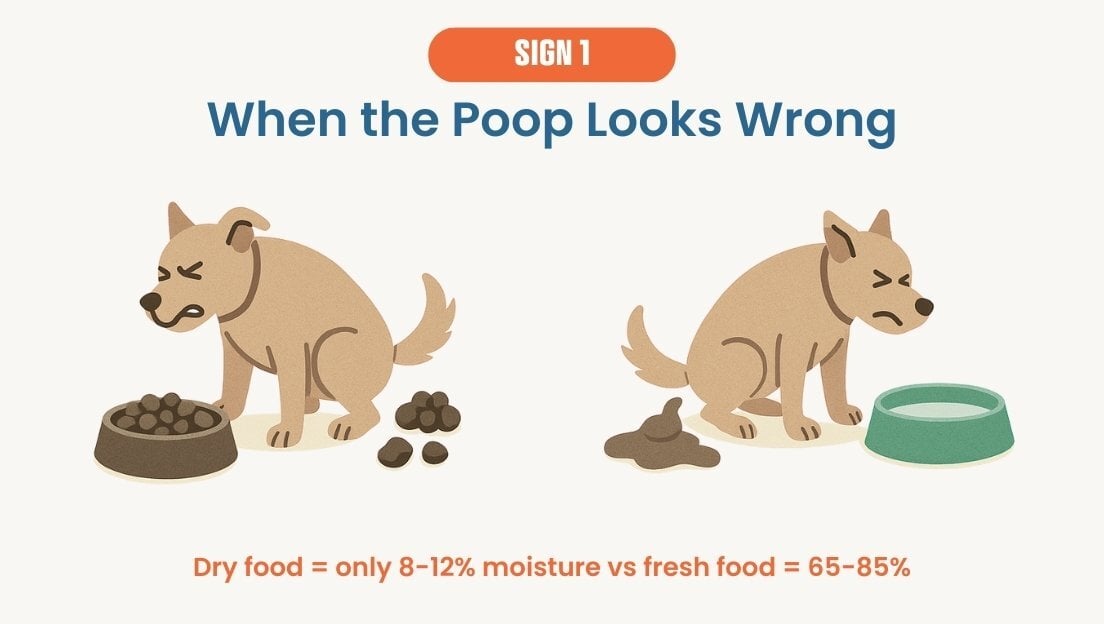
Sign #1: Dry, Hard Stools (Or the Opposite Problem)
Watch your dog after meals. Do they rush to the water bowl, gulping desperately? Dogs eating mostly dry food generally drink more water than dogs eating mostly canned, moisture-rich food. That's because dry food is typically 10 to 12% moisture, while canned food is typically 75 to 78%.
Now let's talk about poop. Because if you're a dog owner, you're already spending more time thinking about it than you ever imagined you would.
Healthy dog stool should be formed and firm, but not dry or hard. Think Play-Doh consistency. But kibble brings very little water with it, so a dog on dry food has to get nearly all of their water from the bowl. If they don't drink enough, stools can become dry, hard and difficult to pass.
Rock-hard stools are not normal, whatever your dog eats. And kibble can be less digestible than fresh food. A 2021 University of Illinois study, funded by fresh pet food maker JustFoodForDogs, found that dogs produced 1.5 to 2.9 times more faeces on kibble than on fresh, cooked diets, and digested less of the protein in their food (about 83% versus 93%). Stool firmness scored the same on every diet in that study, so the difference was in how much came out, not how hard it was.
Watch for straining, crying during defecation, or producing tiny amounts of liquid that squeeze around the blockage. This isn't just uncomfortable; ongoing constipation needs a vet visit.
On the flip side, some dogs have the opposite problem. Dogs digest properly cooked starch well, but poorly digestible carbohydrates or an overload of sugars in the gut can cause loose stools or diarrhoea. If your dog's stools are chronically soft, the recipe may simply not suit them, and it is worth a word with your vet.
|
What to do Start simple. Add warm water or low-sodium bone broth to kibble about 10 minutes before serving. This softens the kibble and adds water to the meal. For constipation, add a tablespoon of pumpkin puree to meals. Pumpkin is a source of fibre, which can help with stool consistency, so long as your dog is drinking well. If problems persist for more than a day or two, speak to your vet and take a fresh look at the food itself. Gently cooked fresh food is mostly water (roughly 60 to 70% in the fresh foods tested in the Illinois study above), so much more of your dog's daily water arrives with every meal. |
Sign #2: Excessive Thirst After Meals
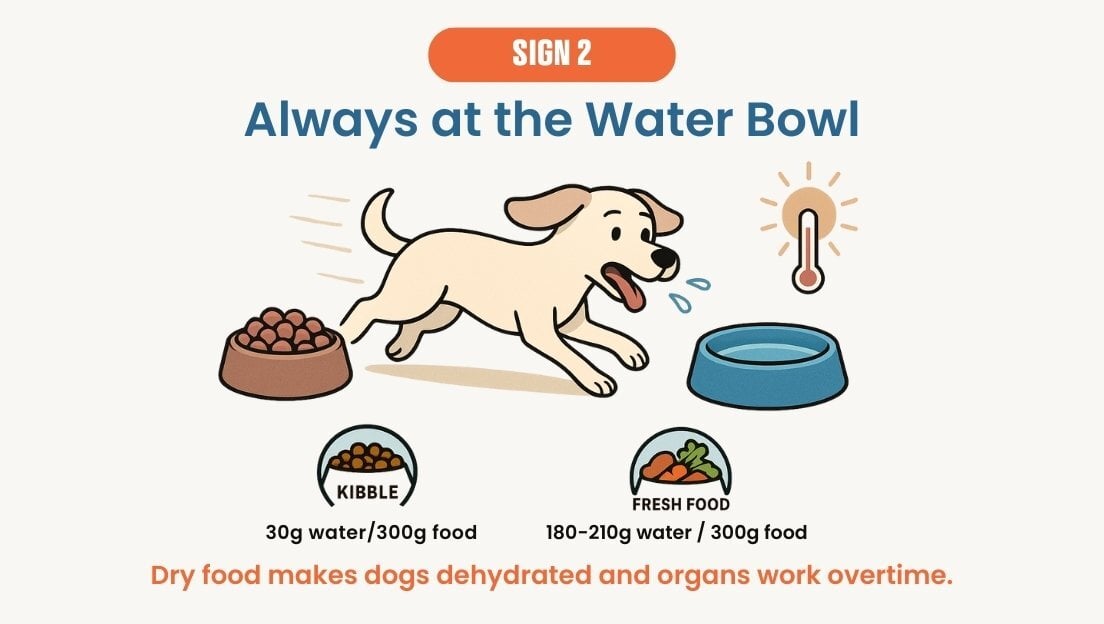
Picture this: your dog finishes their kibble and immediately rushes to the water bowl, gulping frantically like they've crossed a desert. It's a common sight with kibble-fed dogs, and it tells you how little water came with the meal.
The bottom line? Dry food brings very little water with it, so dogs on kibble have to make up the difference at the water bowl. A good drink after a dry meal is normal. But if your dog's thirst suddenly increases, or they seem to drink constantly, see your vet, because that can be a sign of illness.
In the UAE heat, water matters even more. Your dog loses more water keeping cool, so a dog on dry food needs clean, fresh water within reach at all times, indoors and out.
Water is the most important nutrient of all, and healthy dogs with plenty on offer are good at regulating their own intake. The catch with kibble is that almost all of it has to come from the bowl, so an empty bowl, a hot day or a dog that simply doesn't drink much leaves less margin.
|
What to do Immediate relief comes from pre-soaking kibble. Add warm water 10 minutes before serving, allowing it to absorb. This puts more water into the meal itself, so there is less to make up at the bowl afterwards. But recognise this as a band-aid solution. Long-term, consider the moisture maths. If your dog eats 300g of kibble daily, they're getting about 30g of water from their food. The same weight of fresh food would carry roughly 180-210g of water, and because fresh food is less calorie-dense your dog would eat more of it than that. That's at least a glass of water's difference every day. No wonder kibble-fed dogs head straight for the bowl. Fresh food, with its naturally high moisture content, means much of your dog's water arrives with the meal. Fewer frantic post-meal water binges, just steady hydration with every bite. |
Sign #3: Dull Coat, Excessive Shedding, or Flaky Skin (Despite "Complete Nutrition" on the Label)
Your dog's coat is their health report card, and right now it might be failing.
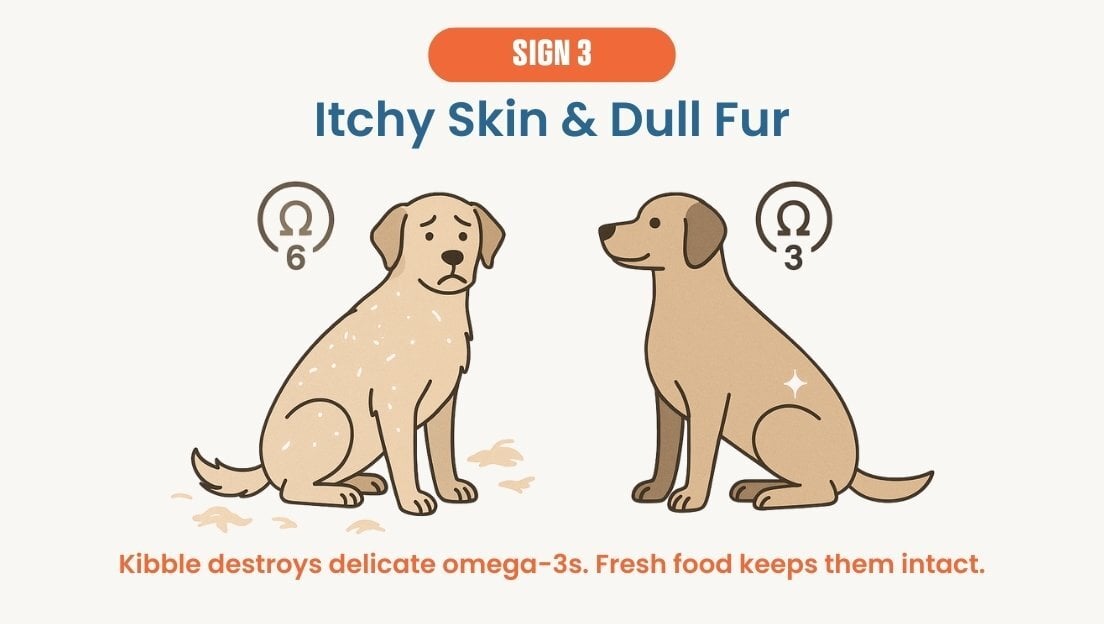
Run your hand through your dog's coat. Does it feel dry, brittle, or lack that healthy shine? Skin and coat depend on essential fatty acids, and while kibble manufacturers add them to their formulas, these fats are delicate and can oxidise over time. What's listed on the bag isn't always what ends up in the bowl.
Here's the problem: there is no agreed ideal ratio of omega-6 to omega-3 fatty acids for dogs. AAFCO's nutrient profiles set only an upper limit of 30:1 and no minimum omega-3 level for adult dogs, so a kibble can meet the standard while supplying very little omega-3. For some dogs, that may show up as a dry, dull coat that no amount of brushing improves.
True essential fatty acid deficiency is extremely rare in dogs fed a properly preserved complete and balanced diet, and skin problems have many causes, so a vet check comes first. But when a dog is short of essential fatty acids, the signs can include:
- Dry, flaky or scaly skin
- A dull coat that has lost its shine
- A coat that feels rough instead of silky
Storage matters too. In one small study of four dry dog foods, the quality and oxidative stability of the fats changed over seven months of storage at room temperature after the bags were opened. So keep kibble sealed, cool and dry.
|
What to do Quick intervention: Add our Supergreen Turkey Topper or Camel Bone Broth to meals. The bone broth adds collagen and amino acids, while the Supergreen topper adds chlorella and fresh greens. Skin and coat change slowly, so give any change in diet several weeks before you judge it. For omega-3 supplementation, ask your vet for a dose of EPA and DHA that suits your dog's weight and health. Look for marine sources such as fish oil or krill oil, which supply EPA and DHA directly, rather than flaxseed oil, which supplies a different omega-3 (ALA). But here's the longer-term answer: fresh food, gently cooked rather than extruded at high heat. Our Vitality Rebuild Pack, with its iron-rich beef and naturally occurring omega-3s, is made with skin and coat in mind. Give it a few weeks and watch for the changes: less shedding, more shine, skin that's supple instead of flaky. |
Sign #4: Picky Eating (Or the "My Dog Won't Eat" Drama)
Your dog loved their kibble... until they didn't. Now mealtime is a negotiation. You've tried different brands, added toppers, even hand-fed them. Sound familiar?
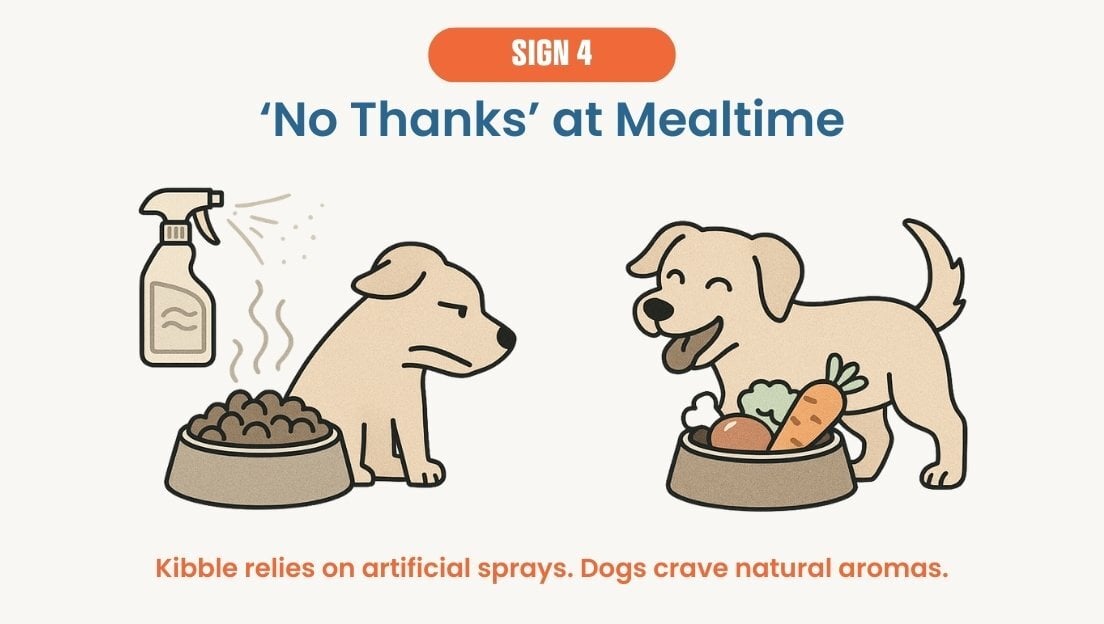
Here's the truth: your dog's sense of smell is far more sensitive than yours. They can pick up things we can't, like kibble that's been open for weeks and is starting to go stale.
Dry food is generally less appealing to dogs than moist food, so manufacturers add flavour enhancers called palatants, most often sprayed onto the kibble as a coating. Plus, the fats in kibble can oxidise during storage, which can affect how the food smells and tastes.
|
What to do Short-term fix: Add warm water or our Camel Bone Broth topper to kibble. Gentle warmth (aim for body temperature, about 38°C) releases more aroma, while the bone broth adds savoury flavour that can tempt a reluctant eater. Our bone broth doesn't just mask the kibble. It adds collagen, glucosamine and amino acids. And if a dog who normally eats well suddenly goes off their food, rule out a medical cause with your vet first. For dogs who've become truly food-averse, try our Turkey with Honey recipe. A touch of honey with easily digestible turkey makes for real palatability without sprayed-on enhancers. Most dogs find whole-food ingredients hard to resist. Long-term fix: The real question is why should you need to doctor your dog's food to make it appealing? The solution isn't finding better tricks to make your dog eat kibble. It's offering food they genuinely want to eat. |
Sign #5: The 3 PM Energy Crash and That "Old Before Their Time" Look
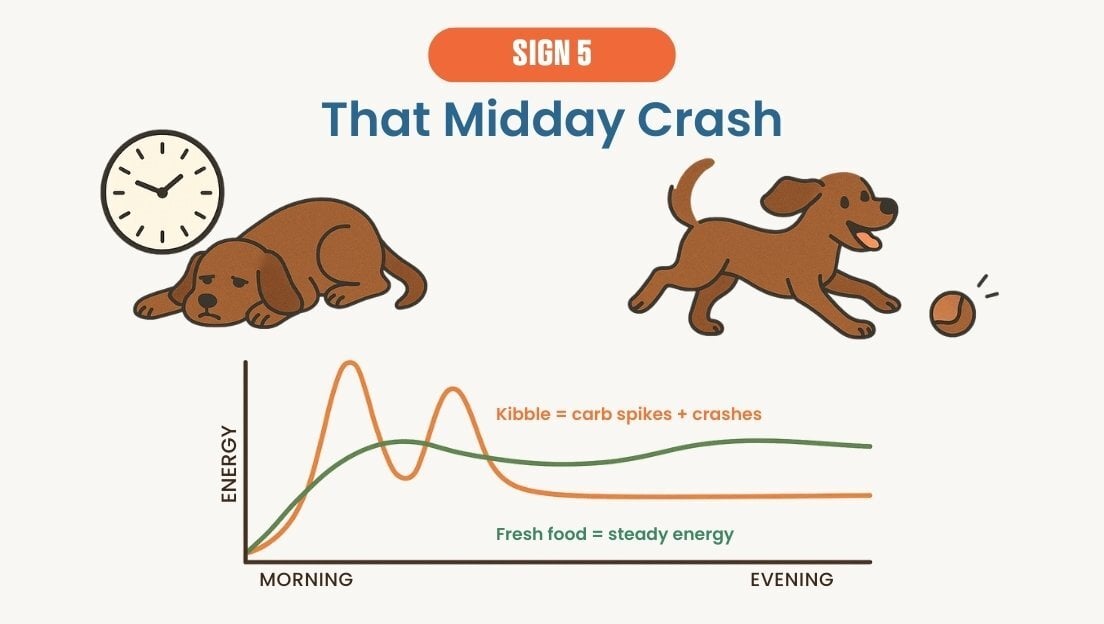
Your dog eats breakfast at 7 AM and by mid-afternoon, they're sluggish, uninterested in play, maybe even irritable. It may not be age or laziness. What's in the bowl can play a part, and a dog that is persistently flat should always see the vet.
Kibble is typically built on starchy ingredients such as corn, wheat, rice or potato, and dogs digest cooked starch very efficiently. There's little research on whether that causes energy dips in healthy dogs, but if your dog gets a burst of energy after meals and flags a few hours later, the balance of the diet is worth a look.
Compare this to fresh food with carbohydrates from vegetables and sensible amounts of protein and fat. The aim is steadier energy through the day: fewer peaks and valleys, just consistent fuel for activity and metabolism.
High-heat processing can also affect protein. The Merck Veterinary Manual notes that excessive heat during manufacturing can reduce protein digestibility, although most manufacturers add extra protein to make up for it.
|
What to do Try smaller, more frequent meals. Instead of two large meals, offer three or four smaller portions of the same daily amount. This can help keep energy levels steadier throughout the day. Add protein-rich toppers like Camel Bone Broth to increase the protein-to-carb ratio of the meal. Long-term, a fresh diet with balanced macronutrients is designed to provide steady energy: consistent vitality throughout the day. |
It's Not About Perfection, It's About Progress
You don't have to throw out the kibble tomorrow and start from scratch. But you do need to acknowledge what your dog is telling you through these signs.
Every day you delay is another day of:
- Almost all of your dog's water having to come from the bowl
- A diet that may be short on omega-3
- Food that is less digestible than it could be
- Missing out on the vitality your dog could have
Start by documenting reality. Take photos of your dog's coat today. Note their energy at different times. Track how much water they're gulping after meals. This isn't about making you feel guilty, it's about establishing a baseline so you can see the transformation when it happens.
The Band-Aid Phase (Days 1-7)
Add moisture to every kibble meal. Use our Bone Broth topper or even just warm water. This single change puts more water into every meal and can mean less frantic drinking afterwards. It's a temporary fix, but it's an easy first step while you plan bigger changes.
The Bridge Phase (Week 2-3)
Introduce real nutrition alongside the kibble. Our Taster Pack lets you test two recipes for just AED 75. Start with 20% fresh food, 80% kibble. Your dog gets variety, better nutrition, and you get to see how they respond to real food.
For dogs showing multiple signs like digestive issues, dull coat, and low energy, our targeted bundles address everything systematically:
- Light Reset Bundle for gentle digestive recovery
- Vitality Rebuild Pack for energy and coat restoration
- Gentle Digestion Bundle for sensitive stomachs
The Transformation Phase (Week 4 and beyond)
By now, you may well have seen changes. Maybe it's the shine returning to their coat. The solid, smaller stools. The enthusiasm at mealtime. The sustained energy throughout the day. Let these improvements guide your next steps.
Some dogs thrive on 50/50 kibble and fresh. Others do best on fully fresh diets. The point isn't to follow a rigid formula; it's to find what makes YOUR dog thrive, because they deserve more than surviving on processed pellets. They deserve to thrive on real nutrition.