How to Safely Switch Your Dog to a New Food
Every dog owner faces this moment eventually: it's time to change your dog's food. Whether your puppy is growing up, your active dog is slowing down, or you've simply discovered the benefits of fresh, human-grade nutrition, making the transition doesn't have to be stressful for you or your dog.
Every dog owner faces this moment eventually: it's time to change your dog's food. Whether your puppy is growing up, your active dog is slowing down, or you've simply discovered the benefits of fresh, human-grade nutrition, making the transition doesn't have to be stressful for you or your dog.
Understanding When and Why Dogs Need Dietary Changes
Your dog's nutritional needs aren't static; they evolve throughout their lifetime. Recognising these shifts helps you provide the best possible care.
Life Stage Transitions: That adorable puppy energy eventually settles into adult nutritional needs around their first birthday (or later for larger breeds). Senior dogs, typically around age seven, often thrive on nutrition that supports their changing metabolism and joint health.
Neutering and Weight Changes: Neutering is an important milestone that significantly impacts a dog’s metabolism and energy levels. After being neutered, many dogs experience a reduction in caloric needs and an increased risk of weight gain. Adjusting portion sizes and choosing lower-calorie or weight-management recipes can help keep them healthy and fit.
Activity Levels and Lifestyle: Weekend hiking buddies have very different nutritional needs compared to couch-loving companions. Active breeds or working dogs burn more calories and often require higher protein levels to maintain muscle mass. In contrast, less active dogs benefit from controlled portions and balanced energy levels to avoid unnecessary weight gain.
Health Considerations: Sometimes veterinarians recommend specific nutritional support for health conditions such as kidney disease, digestive sensitivities, or joint issues. Dogs with food allergies or other special dietary needs can also benefit from carefully chosen, limited-ingredient recipes. Fresh, personalised nutrition can often accommodate these requirements more effectively than generic commercial foods.
The Science of Smooth Transitions
The key to successfully introducing any new food, especially when moving to fresh nutrition, is patience and gradual introduction. Sudden dietary changes can upset your dog's digestive system, leading to stomach discomfort and reluctance to eat.
In fact, Dr. Rizk, our in-house vet at Wunderdog, always reminds owners: “A gradual food transition protects the microbiome, supports digestion, and makes the change smoother for your dog. I always tell pet parents: it’s not just about what you feed, but how you introduce it.”
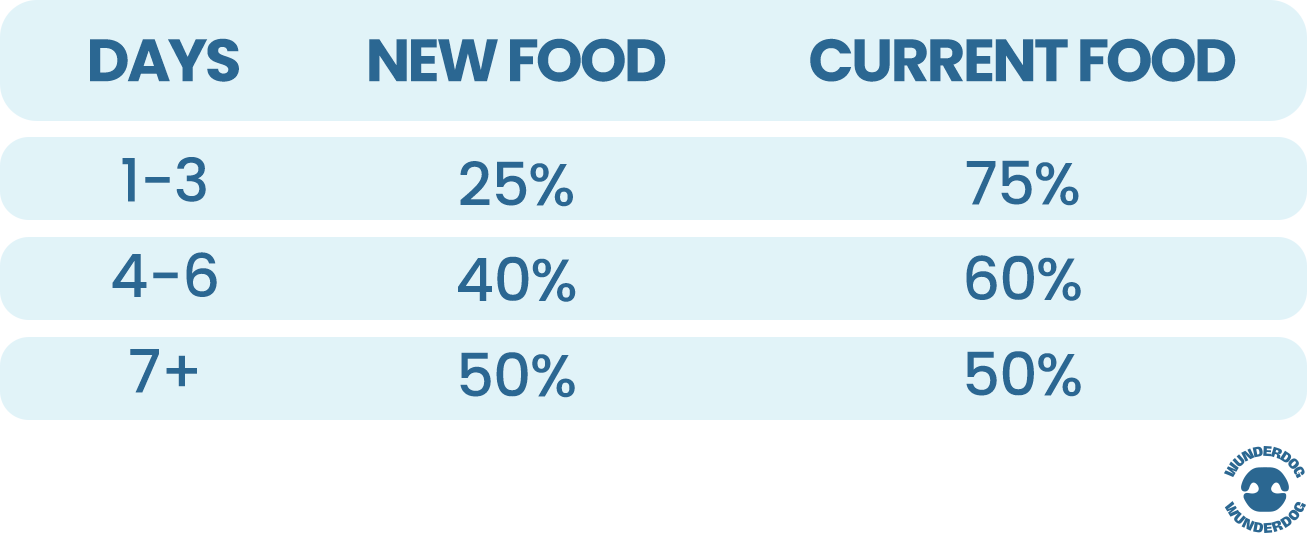
The Seven-Day Method
A seven-day transition is recommended because it gives your dog’s digestive system time to adapt gradually. Dogs have sensitive gut bacteria that need time to adjust to new ingredients and nutrient profiles, which helps avoid digestive upsets such as diarrhoea or vomiting.
For Dogs with Sensitive Stomachs
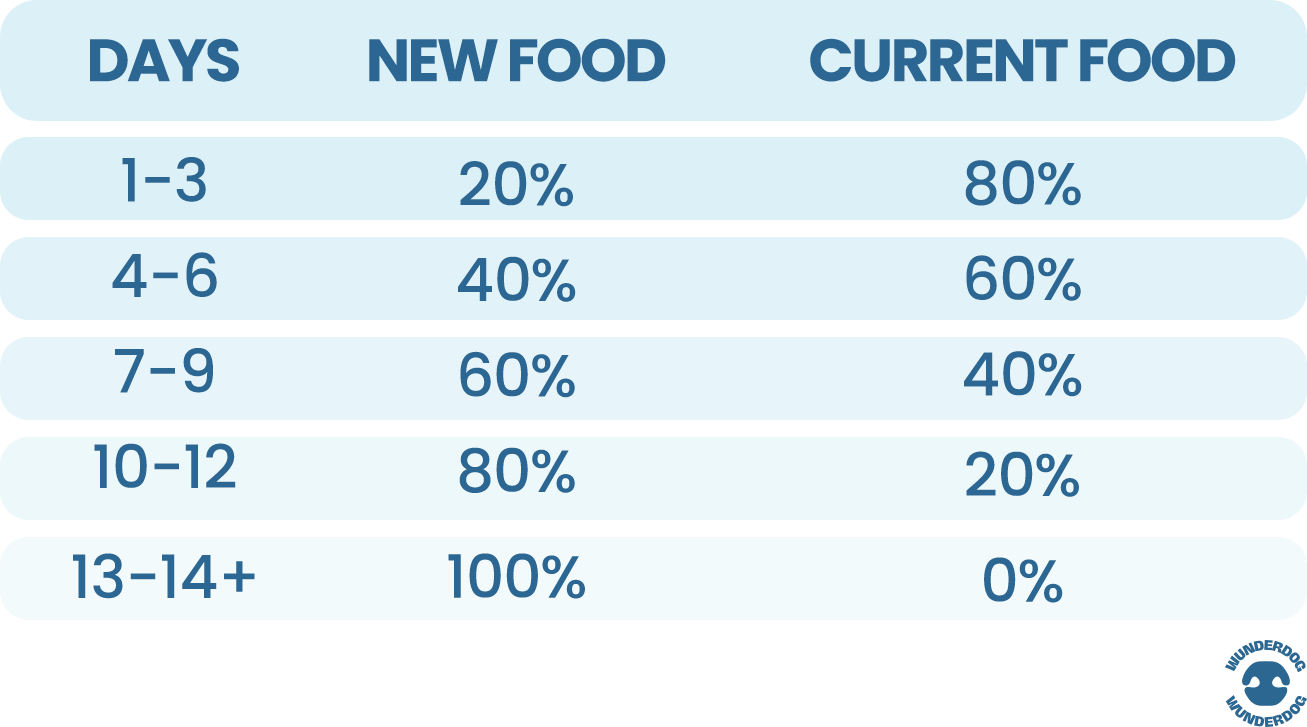
If your dog has a sensitive tummy, food allergies, or known digestive issues, it’s best to extend the transition period to 10–14 days (or even longer).
A slower schedule might look like this:
Always monitor your dog’s stool and appetite closely. If you notice any digestive upset, pause at the current ratio for a few extra days before moving forward. Consult your veterinarian if your dog has a history of severe sensitivities or if you're unsure.
If You Plan to Stay At 50/50
Some dog parents choose to permanently feed a 50% fresh food (like Wunderdog) and 50% current food mix, whether for budget, gradual adaptation, or preference.
In this case, you should still transition gradually over at least 7 days rather than jump directly to 50%.
Once you reach 50%, you can maintain that balance long-term. It’s important to make sure that the combined diet still meets your dog’s daily nutritional needs.
Expert Tips for Success
-
Maintain Routine: Keep normal feeding times and resist the urge to over-treat during the transition period.
-
Individual Pacing: Some dogs need more time to adjust. There's no shame in extending the transition; your dog's comfort matters most.
-
Appeal Enhancement: If your dog seems hesitant, try warming the fresh food slightly or using small amounts as a special topper. Adding a bit of warm water or low-sodium broth to meals can also help ease digestion and boost hydration. Our gentle pumpkin topper is another great choice, as it supports digestion and makes meals more enticing.
-
The Side Dish Strategy: For particularly cautious eaters, serve the new food in a separate bowl alongside their regular meal, letting curiosity work its magic.
Consider Fasting During Transition
In some cases, a short fasting period can help settle a dog’s digestive system before introducing a new food, making the transition smoother. However, fasting is not appropriate for all dogs and should be used with caution. Always consult your vet before including a fasting period, as some dogs (especially puppies, seniors, or those with certain health conditions) may be more vulnerable to skipping meals. Some vets will recommend a fasting period, but when it comes to puppies or senior dogs, it’s always best to seek veterinary advice first (or feel free to contact us).
When Life Demands Quick Changes
Sometimes circumstances require a faster transition. Healthy adult dogs can handle an accelerated approach: start with small portions (about a quarter of their normal meal size) and gradually increase based on acceptance. If they don't eat within 30 minutes, simply remove the food and try again at the next mealtime. This is generally not recommended and should ideally be discussed with a vet, especially for sensitive or senior dogs.
How Much Should You Feed?
There isn’t a one-size-fits-all answer. Portion sizes should reflect your dog’s lifestyle, activity level, weight, whether they are neutered or intact, and their life stage. A highly active young dog will naturally need more energy-dense food than a senior or less active companion.
When in doubt, consult your vet or contact our customer support team to guide you in choosing the right portions and help tailor a plan that fits your dog’s unique needs.
Choosing the Right Food
The secret to smooth transitions often lies in making changes as gently as possible. Consider factors like:
-
Familiar flavours from their current diet
- Life stage appropriateness (puppy, adult, senior)
-
Activity level matching (high-energy, moderate, low)
-
Special dietary requirements or sensitivities
This is where personalised nutrition services excel. Instead of hunting for commercial foods that might work, you get meals specifically tailored to your dog's preferences and needs.
Reading Your Dog's Response
Your dog will communicate how the transition is progressing. Positive indicators include:
-
Normal bathroom habits (the proof is in the poop)
-
Maintained energy levels
-
Healthy appetite
-
Overall contentment and normal behaviour
Always monitor your dog’s stool and appetite closely. While checking your dog's poop, it's quite alarming when the poop has mucus or blood, when it’s watery, or when there's straining. But you'll know you're doing something right when the stool is well-formed, chocolate brown, and easy to pass. If you do notice any of those concerning signs, pause the transition and reach out to your vet for advice before continuing.
Watch for Allergic Reactions
While most dogs only experience mild digestive changes during a food transition, some may develop signs of a true food allergy or intolerance. Symptoms to watch for include itching (especially around the face, mouth or neck), excessive licking or chewing (particularly of the paws), recurrent ear infections, red or inflamed skin, and persistently soft stools.
If you notice any of these signs, stop feeding the new food immediately and consult your vet as soon as possible. Your vet can help determine whether it is a true food allergy or another underlying issue and advise on the best dietary and treatment plan.
In the meantime, you can:
-
Return to your dog’s previous diet (if it was well tolerated) to help settle symptoms.
-
Keep a detailed record of symptoms, including when they started and any changes in behaviour or appetite.
-
Avoid giving new treats or chews, which may further complicate the reaction.
-
Ensure your dog stays hydrated, especially if they have soft stools or vomiting.
Beyond the Transition: Keeping Meals Engaging
-
Making Mealtime an Adventure: Transform eating from a mundane task into an engaging experience by tapping into your dog's natural scavenging instincts.
-
Interactive Feeding Tools: Puzzle feeders turn mealtime into a fun challenge. These puzzles are particularly helpful for fast eaters and provide mental enrichment alongside nutrition.
-
Variety and Rotation: Fresh, personalised meal services can easily rotate different proteins, preventing boredom and maintaining your dog's enthusiasm for their meals.
The Fresh Food Advantage
Switching to fresh, human-grade nutrition represents more than simply changing what’s in your dog's bowl. It’s about embracing a completely different approach to your dog’s health and wellbeing.
-
Personalised to Their Unique Needs: Personalised meals crafted for your dog’s individual requirements mean you’re nourishing their unique journey rather than just filling their stomach. Factors such as life stage, activity level, sensitivities, and flavour preferences can all be addressed.
-
Say Goodbye to Boredom: By rotating proteins and flavours, you can avoid the common problem of food boredom. This approach also eliminates the need to constantly shop around for different commercial foods or toppers.
-
Tailored and Delivered: Everything is designed to be convenient for you and enjoyable for your dog. Meals can be tailored and delivered directly to your door, ensuring your dog stays happy, healthy, and excited about each meal.
Transitioning your dog to a new food does not have to feel overwhelming. In fact, it can be a rewarding opportunity to support their long-term health and happiness. By understanding their unique needs, taking a gradual and mindful approach, and paying close attention to their cues, you can make the switch confidently and safely. Whether you are moving to a fresh, human-grade diet or simply adjusting to match life stage and lifestyle changes, a thoughtful transition ensures your dog not only accepts but truly thrives on their new nutrition. In the end, mealtime becomes more than just feeding; it becomes a daily act of love and care.
Related reading: Why Your Dog Turns Into a Picky Eater When Summer Hits (And How to Help) and Dog Digestive Issues: What They Mean and What to Do