Cat Skin Irritation: Causes, Signs and What to Do
Most cat skin irritation comes from fleas, allergies (to food or the environment), mites, infections or stress. Fresh food with omega-3s and a short ingredient list can support the skin, but it won't fix fleas or infections. Don't put anything on it at home: see your vet, especially for open wounds, round bald patches or a cat who stops eating.
What causes skin irritation in cats?
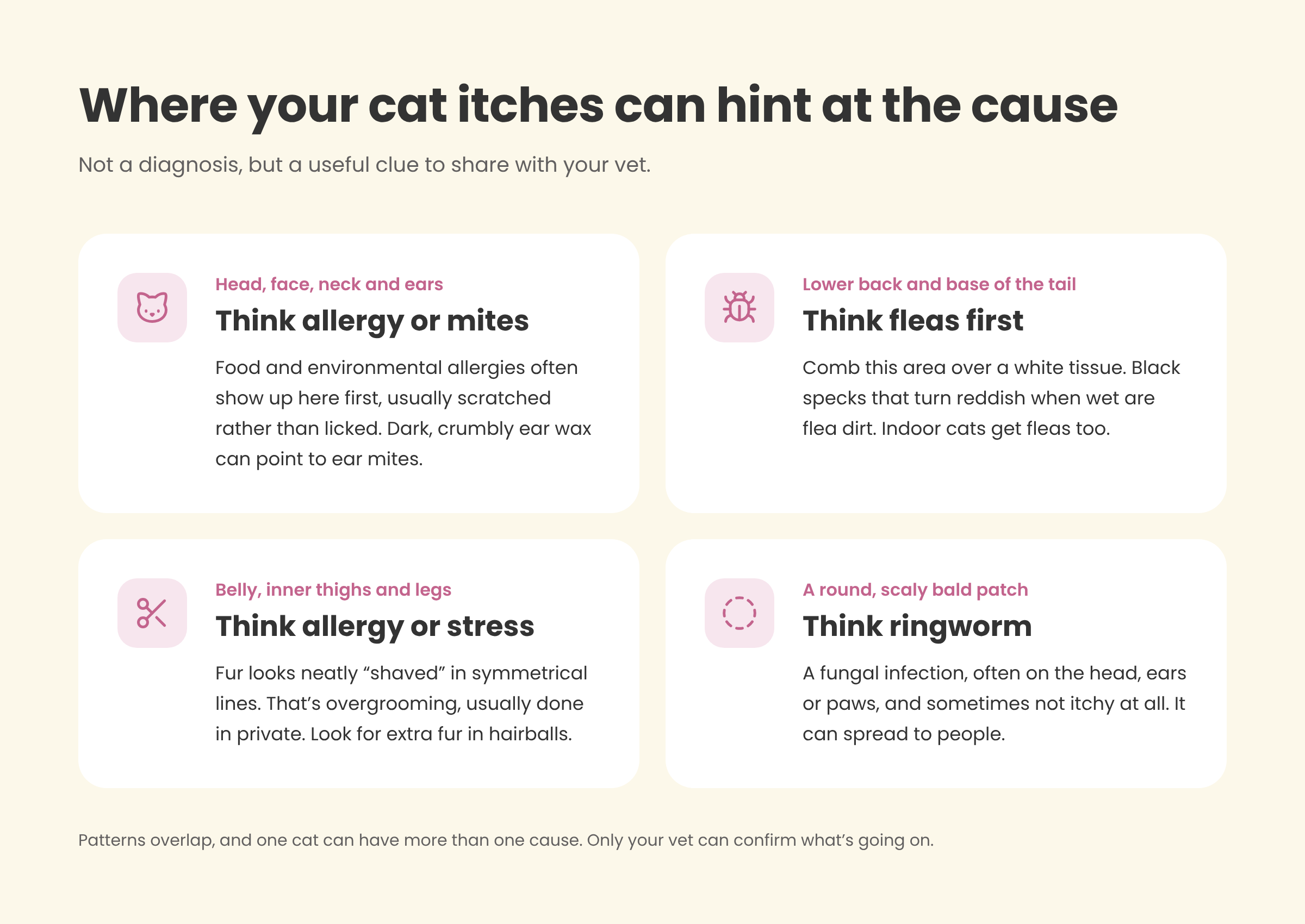
Cats itch in private. You rarely catch them scratching; you just find fur on the sofa and a mysterious bald patch.
The usual suspects:
Fleas
Flea allergy is one of the most common causes of itchy skin in cats (Hobi et al., 2011). Indoor cats too: fleas hitch a ride in on us.
Environmental allergies
Dust mites, pollen and moulds can all trigger itchy skin. Vets now call this feline atopic skin syndrome (Halliwell et al., 2021).
Food allergies
The most common triggers in cats are beef, fish and chicken (Mueller et al., 2016). Not because they're bad foods: cats simply eat them most.
Mites, ringworm and infections
Ringworm is a fungus, not a worm, and humans can catch it.
Stress
A new baby, a new cat or even a new sofa can trigger overgrooming, but vets only blame stress once everything else is ruled out.
How can you tell if your cat has a skin problem?
Look for:
- More licking and grooming than usual
- Thinning fur or bald patches, often in neat, symmetrical lines
- Tiny crusty scabs that feel like sand under your fingers ("miliary dermatitis")
- Red, raw or weepy patches
- More hairballs: all that extra grooming has to go somewhere
Sensitive skin and a sensitive stomach: what matters most?
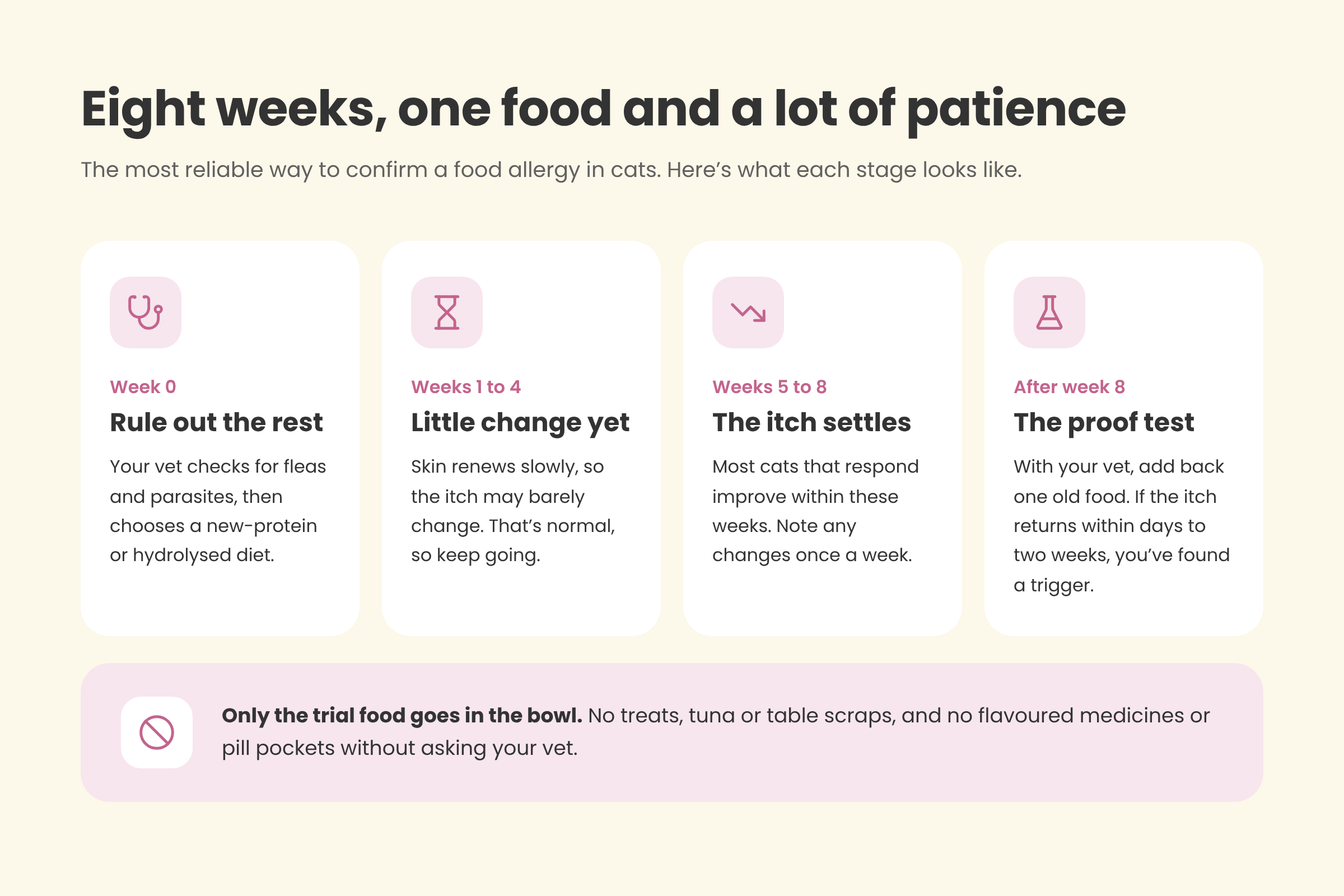
When itchy skin comes with vomiting, soft stools or frequent hairballs, food allergy moves up the list. Three things matter:
- Diagnosis first: rule out fleas and parasites before blaming the food.
- A strict elimination diet: one new protein or a hydrolysed diet, and nothing else, for about 8 weeks, the time most cats need to respond (Olivry et al., 2015).
- Slow changes: sensitive stomachs hate surprises, so switch foods over 2 to 3 weeks. More in Fresh Food for Cats With Sensitive Digestion.
Can fresh food help cats with skin irritation?
It can support the skin as part of the plan:
- Omega-3s: fish oils (EPA and DHA) help calm inflammation, and adding fatty acids to the diet improved some cats with crusty, itchy skin (Harvey, 1993).
- Short ingredient lists: when you know exactly what's in the bowl, spotting a trigger is much easier.
- Quality protein: skin and fur are mostly protein, constantly being rebuilt.
Our Wundercat pâtés, Duck with Tuna, Chicken and Beef, all include salmon oil for marine omega-3s (EPA and DHA), and they’re about 72% moisture. New to fresh food? Read Is Fresh Food Safe for Cats? What the Science Says. If your cat is a fussy eater, try How to Get a Picky Cat to Eat New Food: 10 Tips.
"Is there anything I can put on it?"
It's the top question in cat forums, and the answer is: not without your vet. Many human creams, essential oils (especially tea tree) and dog flea products are toxic to cats. Whatever you apply gets licked off and swallowed. If your cat keeps attacking a wound, use a soft cone until the vet visit.
When should you take a cat with skin irritation to the vet?
Go soon if you see:
- Open sores, bleeding or a spreading wound
- Round bald patches
- Swelling of the face or lips
- Scratching that keeps them (or you) up at night
- Skin problems with vomiting, diarrhoea or weight loss
- A cat who stops eating: don't wait more than a day, as cats can become seriously ill quickly
The bottom line
An itchy cat isn't being dramatic (well, not only). Rule out fleas, see your vet, and feed the skin well.
Need help with your cat's diet? Book a free 30-minute nutrition consultation with me.