How to Manage Cat Diarrhoea: Causes, Diet and When to See a Vet
Most one-off bouts of cat diarrhoea come from a sudden food change, a stolen snack or stress, and settle within a day or two. Keep your cat drinking, keep them eating, skip the human medicines, and feed something simple and easy to digest. But kittens, seniors, and any cat with blood in the stool, vomiting, lethargy or a refusal to eat need a vet, not a home remedy. And if it keeps coming back, that's a diagnosis waiting to happen, not a phase.
First, what are we dealing with?
Normal cat poop is firm, shaped and frankly unremarkable. Diarrhoea is anything soft, runny or more frequent than usual. Vets split it into two camps: acute (sudden, a few days) and chronic (lasting more than two to three weeks, or coming back again and again). That split matters, because the causes and the fixes are very different.
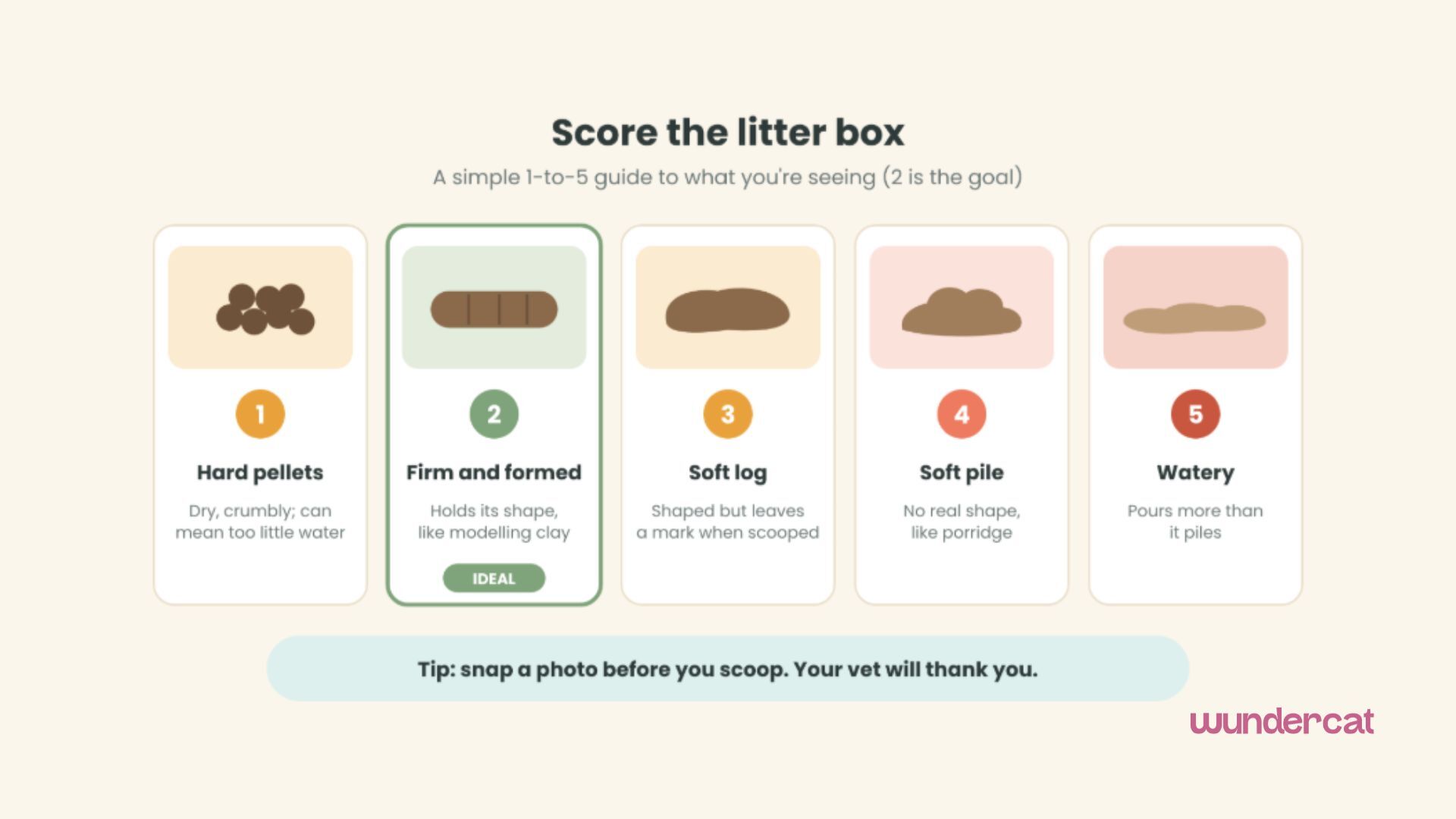
The usual suspects
-
Sudden diet changes.
The number one self-inflicted cause. Cat guts like routine more than cats do.
-
Dietary indiscretion.
That bit of fried chicken off the counter. You know who you are.
-
Stress.
A move, a new pet, a house full of guests. Yes, stress really does go straight to the gut.
-
Parasites.
Worms, Giardia and Tritrichomonas, the last one especially in kittens and multi-cat home.
-
Food sensitivities.
In one study, about half the cats with chronic gut signs improved on an elimination diet.
-
Chronic gut disease.
In middle-aged and older cats, ongoing diarrhoea can mean inflammatory bowel disease or a low-grade intestinal lymphoma. Hyperthyroidism is another classic in seniors.
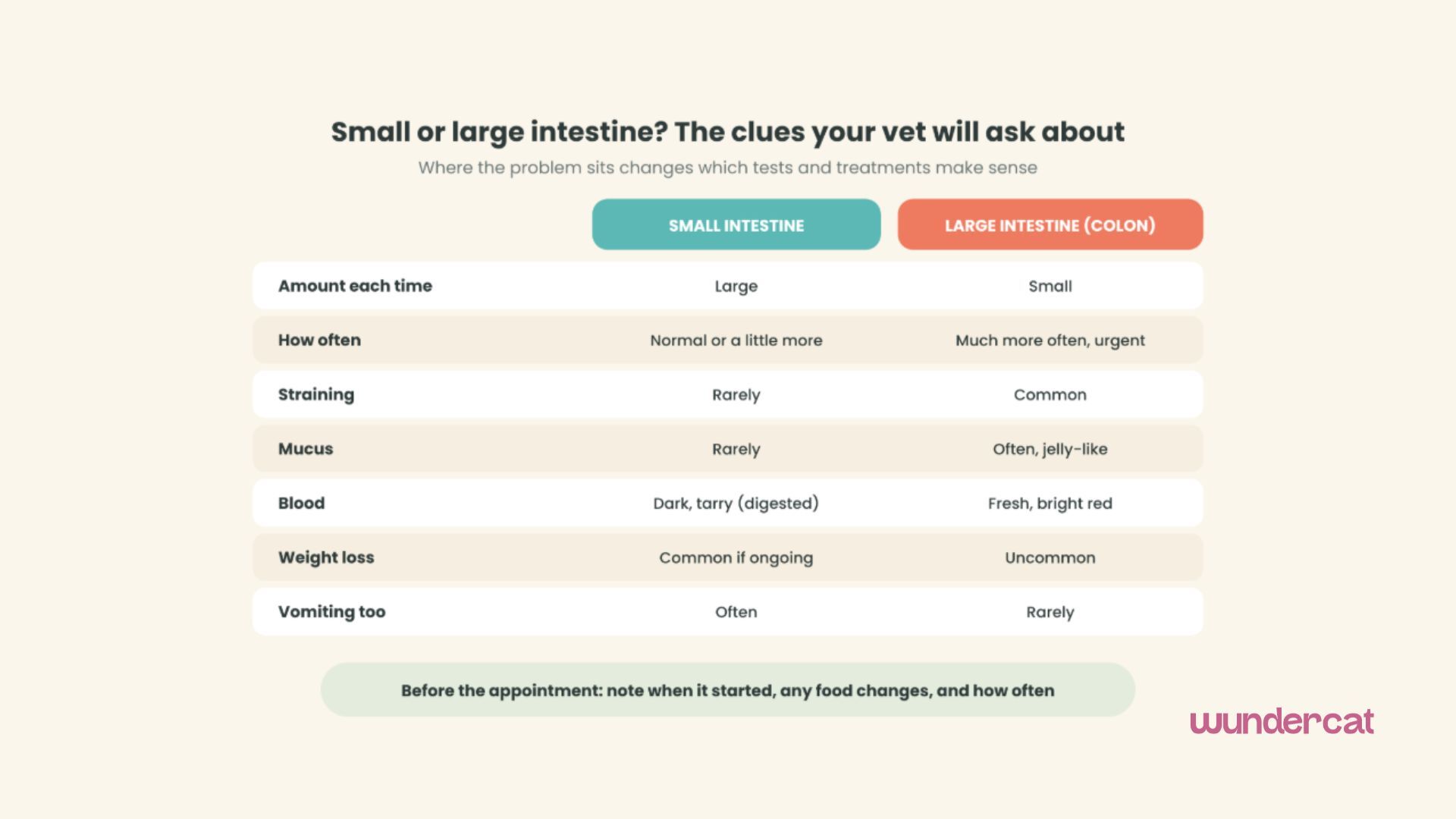
When to see a vet (don't wait on these)
- your cat is a kitten or a senior
- diarrhoea lasts more than 24 to 48 hours
- there's blood, mucus or black, tarry stool
- vomiting, lethargy or a tender belly come along for the ride
- your cat stops eating for more than a day
- weight loss, or the diarrhoea keeps coming back
That "stops eating" point is a big one. Cats who go without food can develop hepatic lipidosis, a serious fatty liver condition. Starving a cat to "rest the gut" is a dog trick that doesn't translate.
Managing a mild bout at home
For an otherwise bright, adult cat:
Hydration first. Diarrhoea drains fluid fast. Fresh water everywhere, and wet food helps more than you'd think. More on that in our guide to cat dehydration signs every UAE owner should know.
Small, frequent, simple meals rather than one big one.
No human medicines. Bismuth subsalicylate, the pink stuff, contains a salicylate, which is aspirin's cousin and dangerous for cats. Anti-diarrhoeals only on your vet's advice.
Probiotics, the proven kind. In a shelter study, cats given Enterococcus faecium SF68 had fewer cases of diarrhoea lasting more than two days.
What diet do vets actually recommend?
For gut trouble, vets reach for diets that are highly digestible, with soluble fibre to firm things up and feed the good bacteria. For chronic cases, the next step is often a strict elimination trial with a novel or hydrolysed protein, usually for at least eight weeks.
Plot twist: fat isn't automatically the villain in cats. A study comparing low- and high-fat diets in cats with chronic diarrhoea found both worked about equally well. So no need to panic over every gram.
And whatever you choose, switch slowly. Our How to Transition a Cat to Fresh Food Without Upset walks you through it.
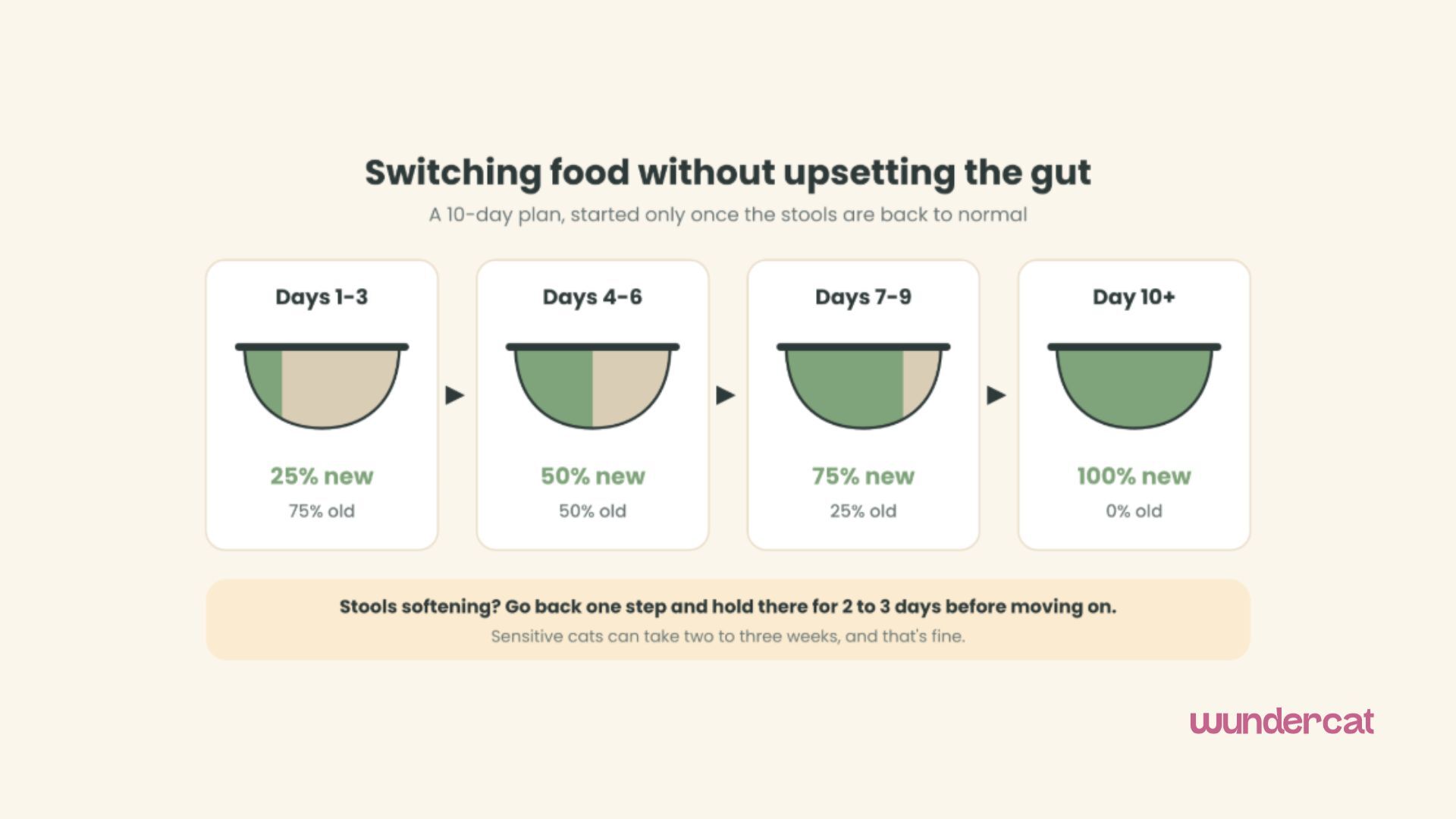
Where fresh food fits
Fresh, gently cooked food won't cure IBD or clear a parasite. What it can offer a sensitive gut is simplicity: short, recognisable ingredient lists, named meats, and no mystery fillers. Wundercat's Chicken Pâté and Beef Pâté both include pumpkin plus guar and locust bean gum, sources of soluble fibre, and run at over 72% moisture to help replace lost fluid. For the full picture, read Fresh Food for Cats With Sensitive Digestion.
The bottom line
A one-day wobble with a happy cat? Water, simple food, patience. Anything longer, bloodier, sadder or more frequent? Vet. Your cat may never thank you, but their litter box will.